
In my years of tending herb gardens and helping folks grow their own flavorful bounty, I've learned that companion planting is like orchestrating a garden symphony – every plant needs to play in harmony. Thyme, that aromatic Mediterranean wonder, is one of my favorite herbs to grow, but I've seen more herb gardens fail because gardeners didn't understand which plants make terrible neighbors for this drought-loving beauty.
Let me spin you a tale about companion planting gone wrong, and more importantly, share the wisdom I've gathered about which plants you should never, ever plant next to your precious thyme – and what to grow instead for a thriving herb garden that'll make your neighbors green with envy.
Why Companion Planting Matters for Thyme
Y'see, thyme is a Mediterranean native that's adapted to rocky, well-drained soils and loves basking in full sun with minimal water. It's like that friend who thrives on adventure and doesn't need much coddling. But when you pair it with plants that have completely opposite needs – well, that's when trouble starts brewing.
The key to successful thyme companion planting lies in understanding that this hardy herb prefers:
- Well-drained, slightly alkaline soil
- Full sun exposure
- Minimal watering once established
- Good air circulation
- Nutrient-poor to moderately fertile soil
When you plant thyme next to moisture-loving, nutrient-hungry plants, you're setting up a battle for resources that nobody wins.
The 10 Worst Companion Plants for Thyme
1. Mint (Mentha species)
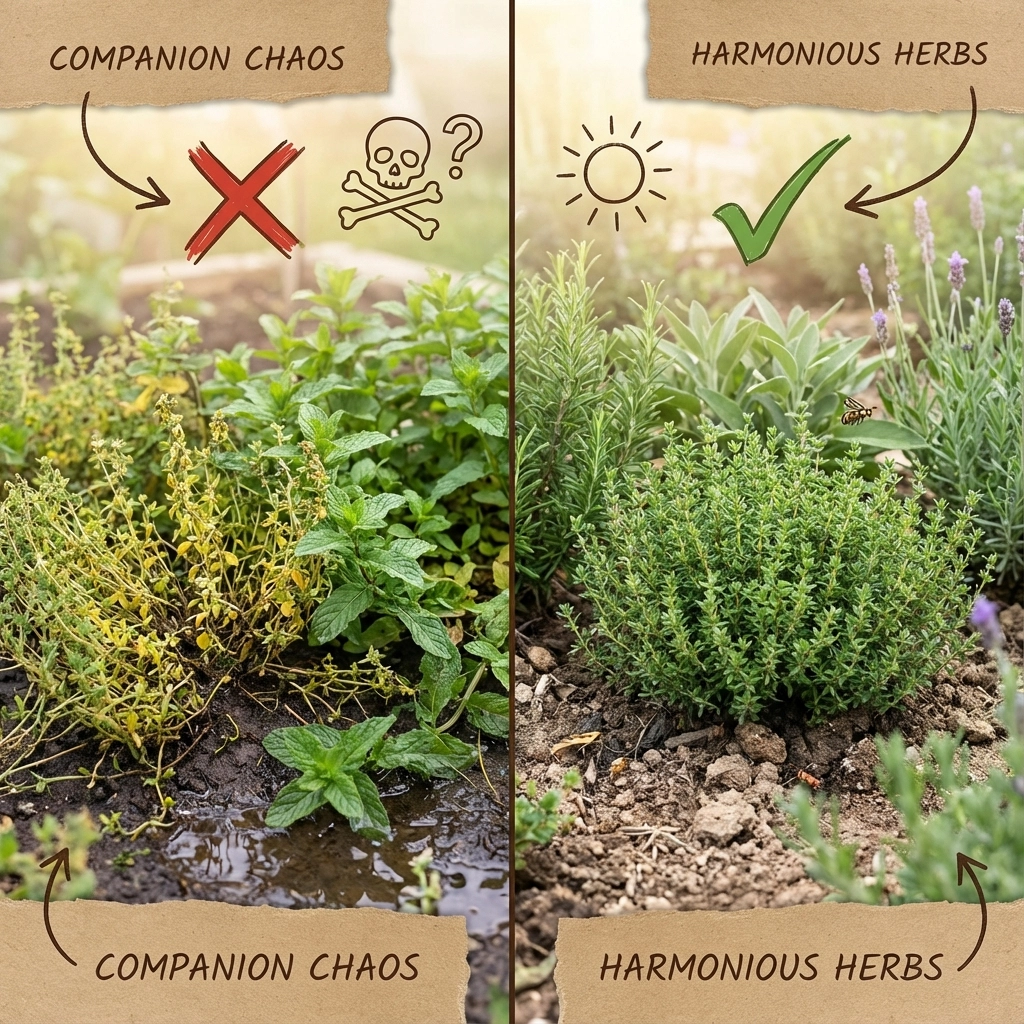
Now, mint might seem like a natural partner for thyme – they're both herbs, after all – but this is one of the biggest mistakes I see gardeners make. Mint is like that house guest who overstays their welcome and takes over your entire living space. It spreads aggressively through underground runners and requires consistently moist soil, the exact opposite of what thyme needs.
Mint will compete aggressively for space while demanding more water than thyme can tolerate. Your thyme will either get crowded out or develop root rot from all that extra moisture.
2. Basil (Ocimum basilicum)
This one always breaks my heart to see because basil and thyme seem like they'd be best friends in the garden. But basil is a moisture-loving annual that needs rich, fertile soil and regular watering. While thyme is establishing its deep roots and learning to survive on minimal water, basil is constantly demanding more resources.
The watering schedule alone makes these two incompatible – basil needs consistent moisture while thyme prefers to dry out between waterings.
3. Cilantro (Coriandrum sativum)
Cilantro grows fast and tall, creating shade that can overwhelm your low-growing thyme. Plus, cilantro attracts different pests and requires more frequent watering. In my experience, cilantro also tends to self-seed aggressively, and before you know it, you've got cilantro popping up everywhere, competing with your carefully placed thyme.
4. Chives (Allium schoenoprasum)
While chives are generally good companion plants for many herbs, they're not ideal neighbors for thyme. Chives prefer richer, moister soil conditions and can spread through their bulbs, potentially crowding out thyme over time. They also attract different beneficial insects that may not align with thyme's pest management needs.
5. Dill (Anethum graveolens)
Dill might look innocent enough, but it's trouble for thyme in multiple ways. First, dill grows tall – sometimes reaching 3-4 feet – and can easily shade out your thyme. Second, dill attracts pests like aphids and spider mites that can then spread to your thyme plants. Finally, dill has a taproot that competes directly with thyme for deep soil resources.
6. Fennel (Foeniculum vulgare)
Here's a plant that's downright hostile to most garden companions, including thyme. Fennel is allelopathic, meaning it releases chemicals into the soil that actually inhibit the growth of nearby plants. Its deep taproot also competes aggressively for nutrients and water. I've seen fennel single-handedly destroy entire herb garden sections.
7. Parsley (Petroselinum crispum)
Parsley requires consistently moist, nutrient-rich soil – exactly what thyme doesn't want. While parsley won't aggressively compete like mint, the different watering and feeding requirements make them poor companions. Your thyme will either get too much water or your parsley will struggle from drought stress.
8. Large Cucumbers (Cucumis sativus)
Cucumbers are water-hungry vines that need rich, consistently moist soil. They'll sprawl and potentially smother your thyme while demanding irrigation schedules that'll cause root rot in your Mediterranean herbs. Plus, cucumbers attract different pests and diseases that can spread to nearby plants.
9. Wetland Plants
Any plant that naturally thrives in boggy or consistently wet conditions – like cattails, flag iris, or marsh marigolds – will create soil conditions that are deadly for thyme. These plants indicate soil that stays too wet for too long, leading to inevitable root rot in your thyme.
10. Aggressive Spreading Grasses
Spreading grasses, whether ornamental or weedy, will compete aggressively with thyme for space and nutrients. Their fibrous root systems can overwhelm thyme's more delicate root structure, and many grasses prefer different soil pH levels than thyme.
What to Plant Instead: Thyme's Best Garden Companions
Now that we've covered what NOT to plant with thyme, let me share the companions that'll help your thyme thrive and create a garden that's more productive than a well-tuned tractor.
Mediterranean Herb Allies
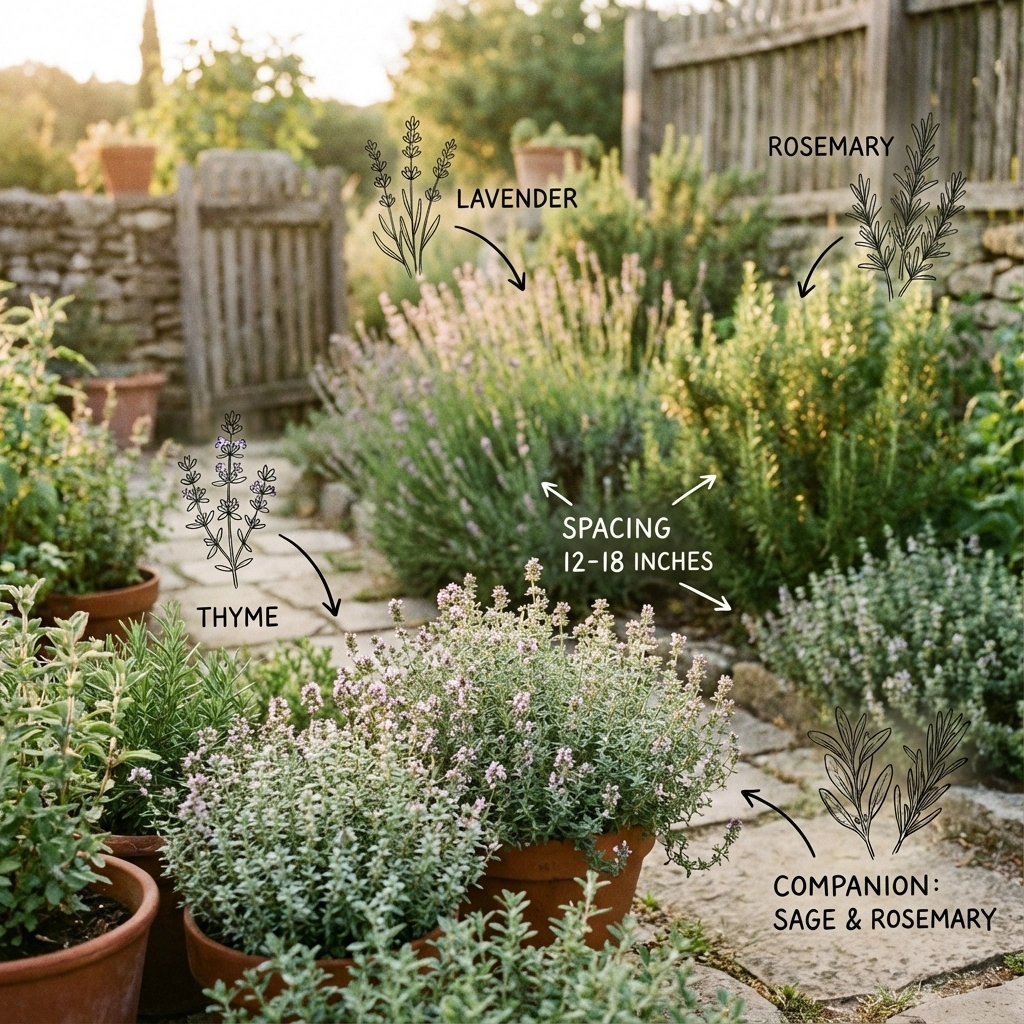
Lavender: These two are like old friends who've traveled the Mediterranean together. Both love well-drained soil, full sun, and minimal water. Lavender's height provides nice contrast to thyme's low profile.
Oregano and Marjoram: These herbs share thyme's water and soil requirements perfectly. They'll create a fragrant carpet that deters pests naturally.
Rosemary: Another drought-tolerant Mediterranean native that'll thrive in the same conditions as thyme. The woody stems provide nice structural contrast.
Sage: Particularly effective when planted with thyme because both herbs have similar water needs and complement each other's pest-deterrent properties.
Vegetable Companions
Tomatoes: This is one of my favorite combinations. Thyme helps repel tomato hornworms and other pests while both plants enjoy similar watering schedules once established.
Brassicas: Cabbage, broccoli, and Brussels sprouts benefit from thyme's pest-deterrent properties, and they don't compete for the same soil nutrients.
Potatoes: Thyme helps deter Colorado potato beetles while both plants prefer well-drained soil conditions.
Eggplant: Another nightshade family member that pairs beautifully with thyme, sharing similar heat and sun requirements.
Beneficial Flowers
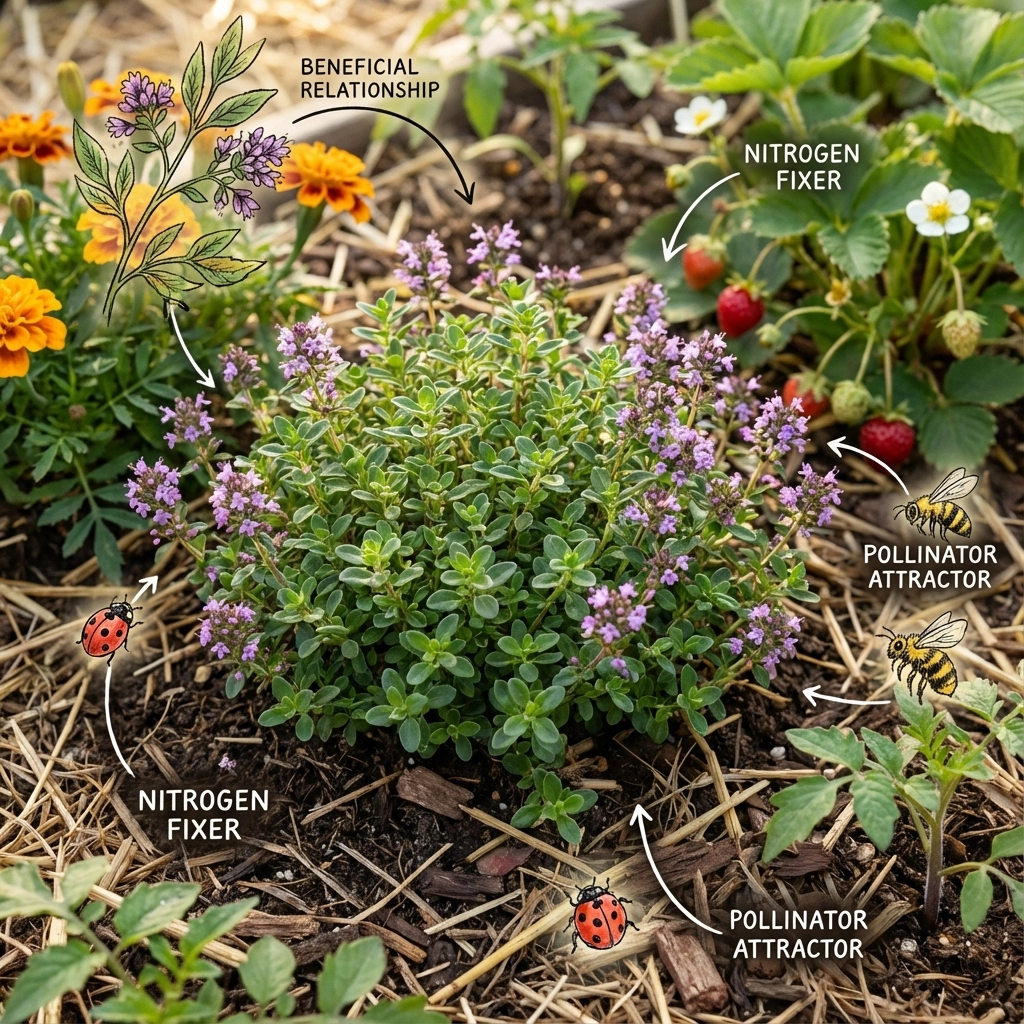
Marigolds: These cheerful flowers attract beneficial insects and repel harmful pests, creating a protective barrier around your thyme.
Nasturtiums: These edible flowers attract aphids away from your thyme while adding beautiful color to your herb garden.
Cosmos: Light, airy flowers that won't compete with thyme for space while attracting pollinators.
Fruit Companions
Strawberries: Both plants prefer similar soil conditions and strawberries benefit from thyme's pest-deterrent properties.
Blueberries: These acid-loving shrubs create nice structure while thyme helps suppress weeds around their shallow root systems.
Practical Tips for Successful Thyme Companion Planting
Start with Soil: Ensure your garden bed has excellent drainage before planting thyme with any companion. If water puddles after rain, your thyme won't be happy regardless of its neighbors.
Plan for Growth: Remember that thyme spreads slowly but steadily. Give it room to expand without crowding its companions.
Water Wisely: Group plants with similar water needs together. Your thyme and its Mediterranean companions should be in a separate irrigation zone from your moisture-loving vegetables.
Consider Timing: Plant annual companions like nasturtiums and marigolds after your perennial thyme is established and growing strongly.
Creating Herb Garden Zones
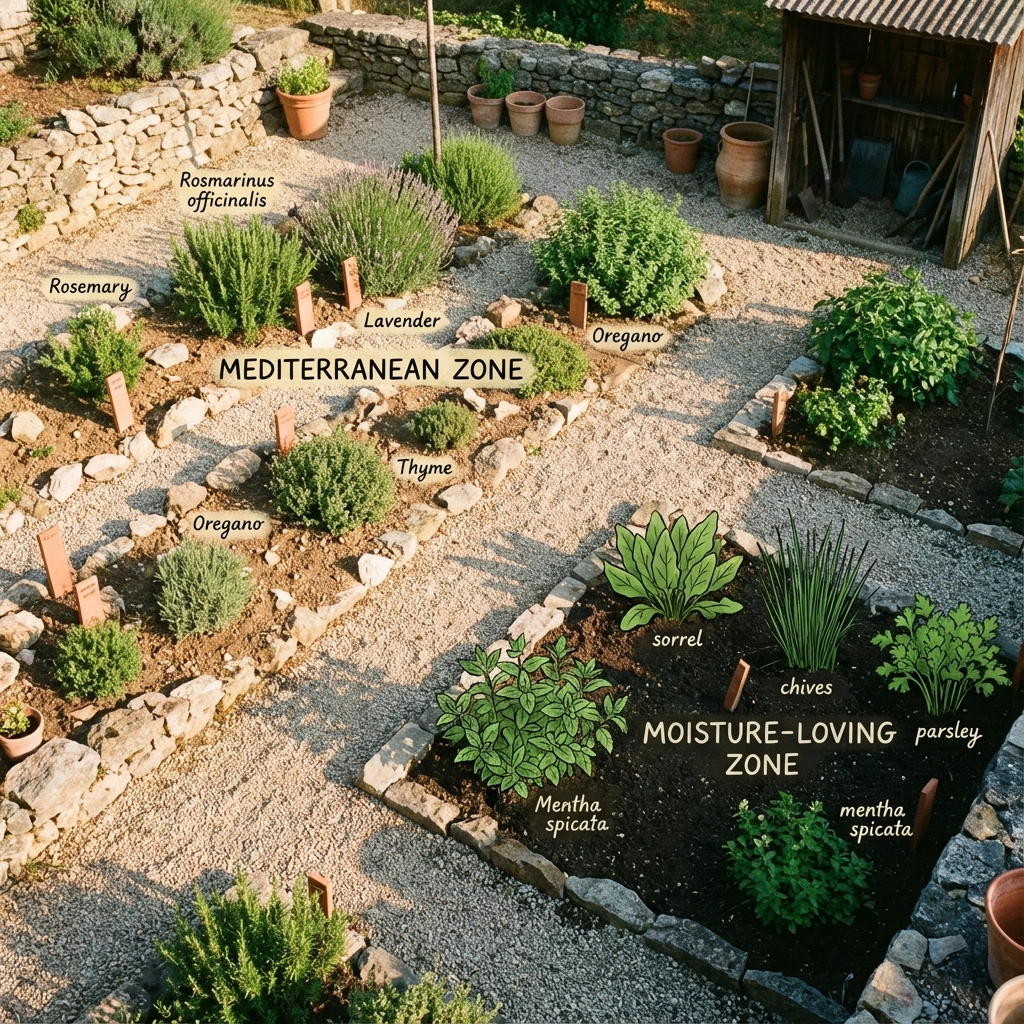
I always recommend creating distinct zones in your herb garden based on water and soil requirements:
Zone 1: Mediterranean Herbs (Thyme, rosemary, oregano, lavender, sage)
- Well-drained, slightly alkaline soil
- Full sun
- Minimal watering once established
Zone 2: Moisture-Loving Herbs (Basil, cilantro, parsley, chives)
- Rich, organic soil
- Regular watering
- Some afternoon shade acceptable
Zone 3: Spreading Herbs (Mint family)
- Contained areas or separate beds
- Consistent moisture
- Root barriers to prevent spreading
This zoning approach prevents the companion planting mistakes that can ruin an entire herb garden.
The Benefits of Getting It Right
When you pair thyme with the right companions, magic happens. Your thyme will:
- Develop stronger, more concentrated flavors
- Require less water and maintenance
- Naturally repel garden pests
- Create habitat for beneficial insects
- Provide ground cover that suppresses weeds
I've seen herb gardens transform from struggling patches to thriving ecosystems simply by understanding and respecting each plant's natural preferences.
Seasonal Considerations
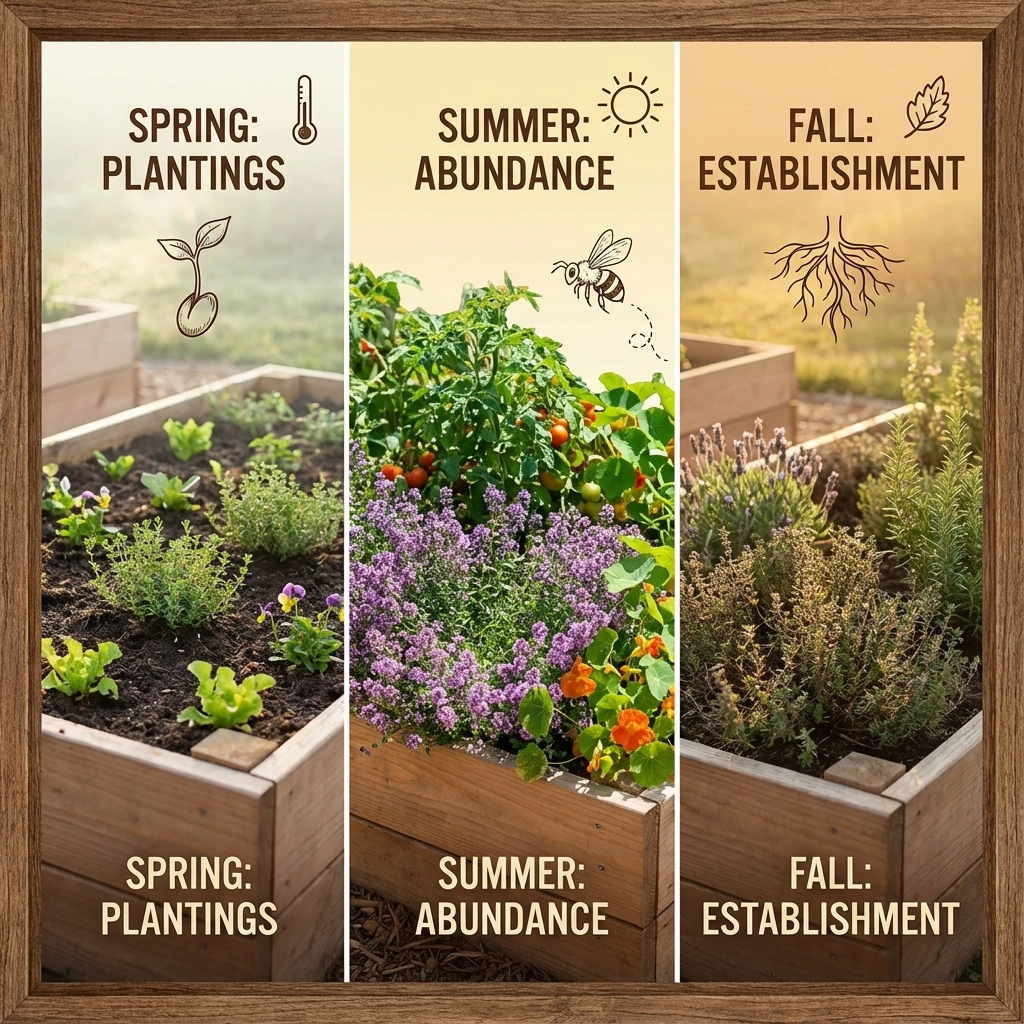
Spring: Plant thyme with cool-season companions like lettuce and early brassicas that can benefit from its pest-deterrent properties while temperatures are still moderate.
Summer: Your established thyme will thrive alongside heat-loving companions like tomatoes, eggplant, and Mediterranean herbs.
Fall: Late-season plantings should focus on perennial companions that can establish alongside thyme before winter dormancy.
Remember, successful companion planting is about creating plant communities that support each other's growth rather than competing for resources. When you understand thyme's preferences and choose companions accordingly, you're setting up your herb garden for years of abundant harvests.
Your thyme will reward you with intense flavors, natural pest control, and the satisfaction of a garden that works in harmony with nature's own design. Avoid those problematic companions I've mentioned, choose plants that share thyme's Mediterranean heritage, and you'll have an herb garden that's more reliable than a sunrise and twice as rewarding.
The key is patience, observation, and remembering that in gardening, as in life, the right relationships make all the difference. Your thyme – and your taste buds – will thank you for choosing its neighbors wisely.