
In my years of helping gardeners make the most of their growing spaces, I've seen countless folks transform their patios, balconies, and decks into productive pepper paradises. There's something incredibly satisfying about stepping outside your door and plucking a crisp, colorful bell pepper you grew yourself. And the best part? You don't need a sprawling garden plot to make it happen.
Container growing offers some unique advantages that even in-ground gardeners envy. Your peppers are mobile, so you can chase the sun throughout the day. Weeding becomes a distant memory. And if the weather takes an unexpected turn, you can simply move your plants to shelter. But success hinges on understanding a few key principles that differ from traditional garden beds.
Choosing the Right Container
Let's start with the foundation of your container garden: the pot itself. Size matters more than most people realize. While you might be tempted to grab those charming small pots at the garden center, your bell peppers will thank you for thinking bigger.
Aim for containers with at least 3 gallons of volume, though 5-10 gallon pots will reward you with significantly better yields. Think of it this way: a pepper plant's root system is like an underground mirror of the foliage you see above ground. Cramped roots mean stunted growth and fewer peppers.
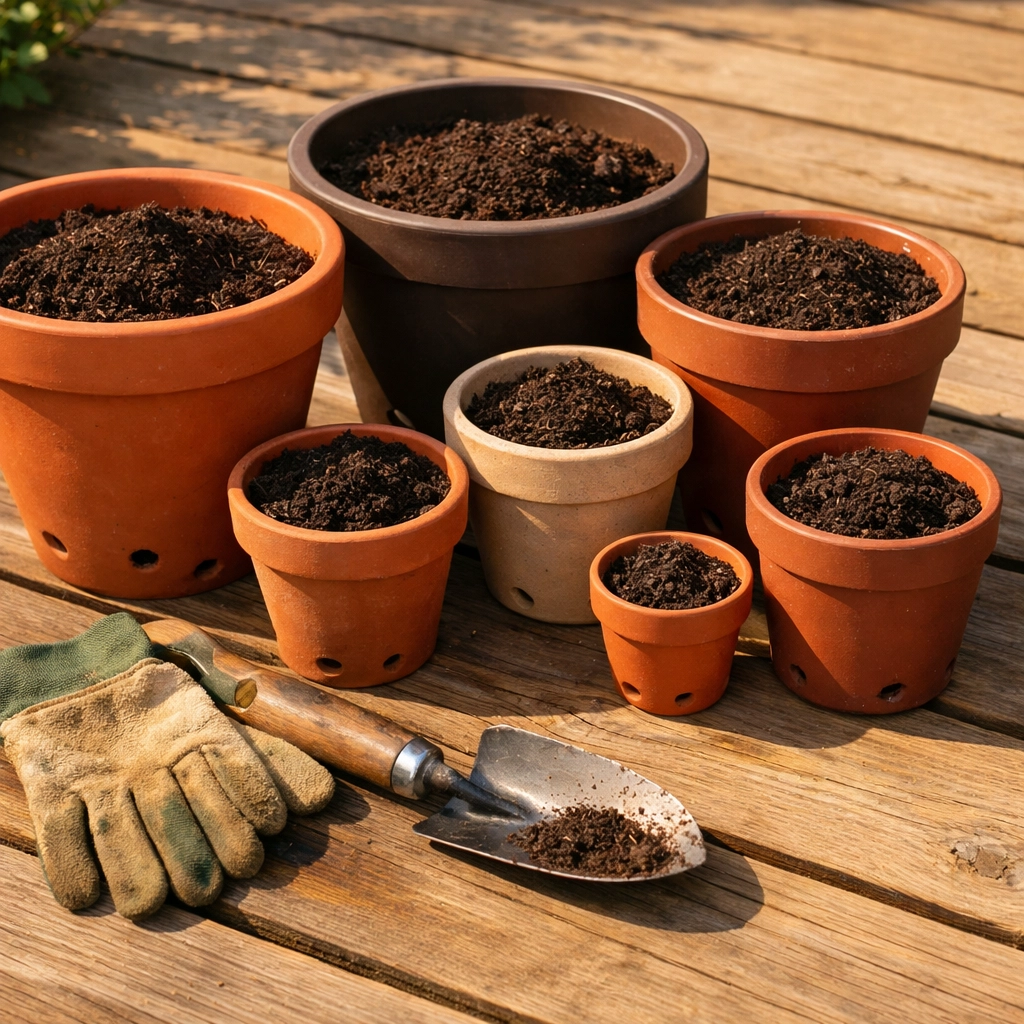
Drainage is non-negotiable. Your container must have holes near the bottom to allow excess water to escape. Without proper drainage, water accumulates and creates a swampy environment where roots suffocate and rot. I've seen too many promising pepper plants meet an untimely end because of waterlogged soil.
Material choice offers some flexibility. Terra cotta pots are attractive and allow roots to breathe, but they dry out faster. Plastic or resin containers retain moisture better and weigh less if you need to move them around. For patio growing, I often recommend lighter materials that won't break your back when repositioning.
Building the Perfect Soil Foundation
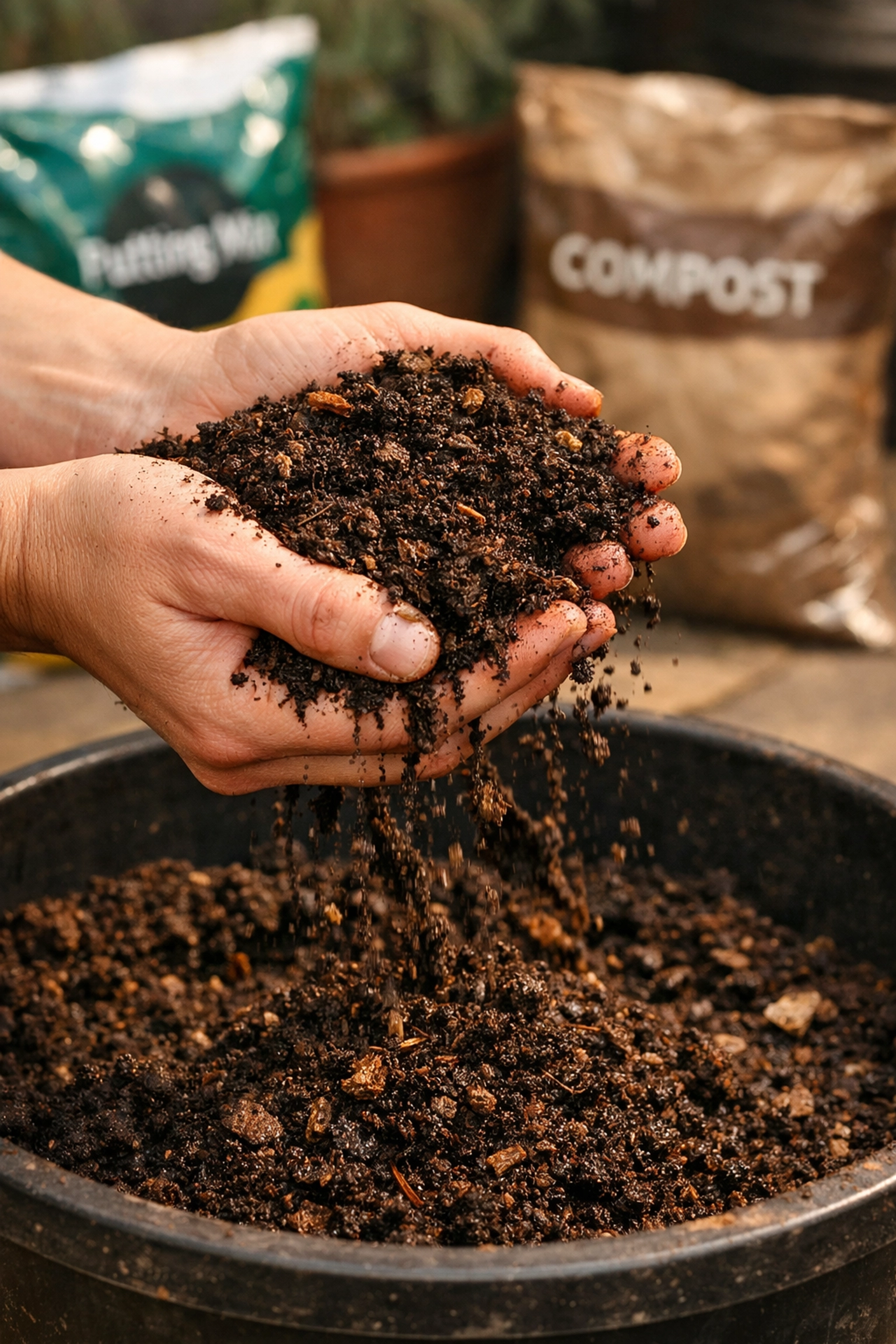
Container soil differs dramatically from garden dirt. Regular garden soil compacts in containers, creating drainage problems and suffocating roots. Instead, use a high-quality potting mix designed specifically for container growing.
Mix your potting soil with compost and a slow-release organic fertilizer before planting. This creates a nutrient-rich environment that sustains your peppers throughout the growing season. Pre-moisten the mix before filling your containers - dry potting soil can be surprisingly difficult to wet thoroughly once it's in the pot.
The beauty of container growing lies in your complete control over soil conditions. You're creating a perfect little ecosystem tailored specifically for bell peppers.
Starting Your Journey from Seed
Growing from seed offers tremendous satisfaction and opens up a world of heirloom varieties you'll never find at the nursery. Our California Wonder Bell Pepper Seeds are a fantastic choice for container growing, producing thick-walled, blocky peppers that start green and ripen to a gorgeous red.
Plant seeds about 1/4 inch deep in seed starting cells. Sow 2-3 seeds per cell as insurance against germination failures. Some seeds simply don't sprout, and this approach ensures you'll have healthy seedlings to work with.
Temperature and humidity are critical during germination. Bell peppers are tropical plants at heart, and they need warmth to wake up. Keep your seeds in a warm spot between 75-85°F and cover them with a humidity dome to maintain moisture. Within 3-7 days, you should see those first exciting green shoots breaking through the soil.
Once seedlings emerge, open the dome daily for air circulation. This prevents fungal issues that plague overly humid environments. When your seedlings develop their first true leaves - those distinct pepper-shaped leaves rather than the initial rounded seed leaves - they're ready for stronger light.
Place them under LED grow lights or in your sunniest window. After 3-4 weeks of growth, begin feeding with a full-strength liquid fertilizer to support their development.
Transplanting with Care
When your seedlings have developed a strong root system and the weather has warmed reliably, it's time to move them into their permanent containers. This transition can stress plants temporarily, but gentle handling minimizes the shock.
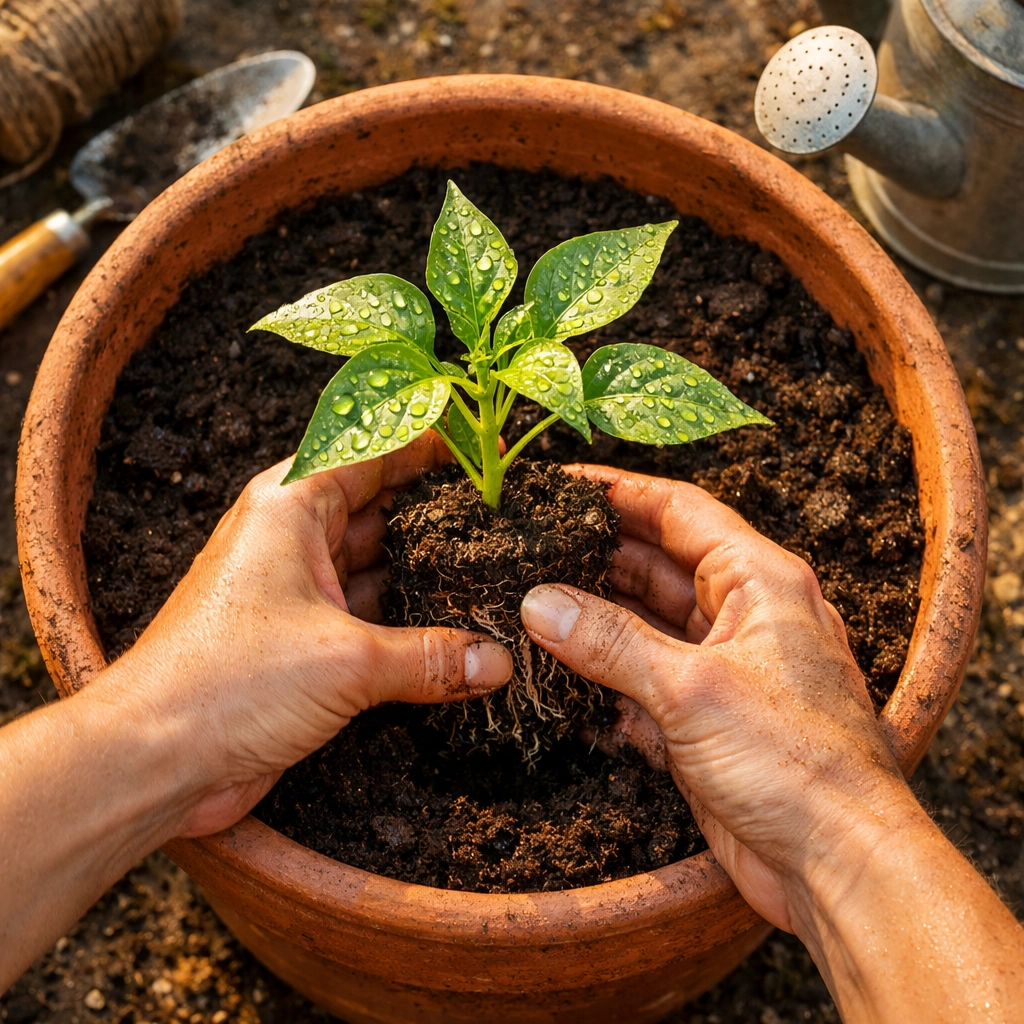
Carefully remove the entire root ball from the seed cell, keeping the soil intact around the roots. Dig a hole in your prepared container soil deep enough to accommodate the root ball without cramping it. Place the seedling so the stem sits at the same depth as it was in the seed cell. Fill in around the roots and water immediately.
Don't panic if growth seems to slow or stop for a few days after transplanting. This pause is normal as the plant adjusts to its new home. Within a week, you should see renewed vigor and fresh growth.
Watering: The Container Growing Challenge
Here's where container growing demands more attention than traditional beds. The limited soil volume in containers means water reserves deplete quickly, especially during hot summer days.
Your goal is to maintain steadily moist soil throughout the growing season. This doesn't mean soggy - remember those drainage holes we discussed earlier? The soil should feel like a wrung-out sponge: moist but not dripping wet.
During peak summer, you might need to water daily or even twice daily. Check soil moisture by sticking your finger about an inch deep into the soil. If it feels dry at that depth, it's time to water. Consistent moisture prevents stress-related problems like blossom end rot, where the bottom of developing peppers turns black and leathery.
Consider setting up a simple drip irrigation system if you're growing multiple containers or if daily watering becomes challenging. The small investment pays dividends in convenience and plant health.
Feeding Your Pepper Plants
Container-grown plants rely entirely on you for nutrition since they can't extend roots into surrounding soil searching for nutrients. That slow-release fertilizer you mixed into the soil provides a baseline, but actively growing peppers need supplemental feeding.
Feed your plants with liquid organic fertilizer every couple of weeks once they're established and growing actively. Watch for signs of nutrient deficiency like yellowing leaves or slow growth, which signal it's time to adjust your feeding schedule.
Understanding your hardiness zone helps you time your growing season perfectly. Check out our guide on understanding hardiness zones to optimize your planting schedule.
Supporting Your Plants
As your bell peppers mature and begin setting fruit, those seemingly sturdy stems can buckle under the weight of a heavy pepper crop. Providing support prevents heartbreaking stem breakage just when your harvest is within reach.
Install a tomato cage or stake system early in the plant's life. It's much easier to add support before the plant fills out than trying to thread stakes through dense foliage later. Gently tie stems to stakes using soft plant ties or strips of cloth, leaving some slack for natural movement and growth.
Position your containers where they'll receive at least 6-8 hours of direct sunlight daily. Bell peppers are sun-worshippers, and strong light exposure promotes robust growth, abundant flowering, and better fruit development. The mobility of containers lets you chase ideal light conditions as the sun's angle changes through the season.
Harvest Time: The Reward for Your Patience
Bell peppers offer a flexible harvest window. You can pick them green for a crisp, slightly bitter flavor, or leave them on the plant to ripen into red, yellow, or orange jewels bursting with sweetness and nutrition.
Harvest frequently to encourage continued production. When a plant sets fruit, it thinks its reproductive job is done and slows down. By removing peppers, you signal the plant to keep producing. Use sharp garden shears rather than pulling peppers off by hand, which can damage stems and branches.
A healthy container-grown bell pepper plant can produce 5-10 peppers throughout the season, sometimes more with optimal care. That's a impressive harvest from a single patio pot.
Your Patio Pepper Journey Awaits
Container growing transforms any sunny outdoor space into a productive garden. The satisfaction of growing your own food connects you to natural rhythms and rewards your care with flavors no grocery store can match. Your patio pepper garden is a living classroom where you'll learn something new each season.
Start with quality heirloom seeds, choose containers with room for roots to spread, and commit to consistent watering and feeding. Your pepper plants will respond with vigorous growth and a generous harvest that extends from summer into fall. Every bell pepper you harvest represents your dedication and growing skill - a tangible reminder that great gardens come in all sizes.