
Let me tell you something about Cherokee Purple tomatoes, these beauties are the kind of heirloom that makes you fall in love with growing your own food. I've seen more than my fair share of gardeners assume that because they've only got a balcony or a small patio, big, sprawling tomato varieties are off the table. Not true, friend. Not true at all.
Cherokee Purple tomatoes, with their deep dusky color and that smoky-sweet flavor that tastes like summer itself, can absolutely thrive in containers. You just need to know a few tricks of the trade, and I'm about to share them all with you.
Why Cherokee Purple Works in Containers (Despite What You Might Think)
Now, I'll level with you, Cherokee Purple is what we call an indeterminate variety. That means it keeps growing and producing fruit all season long, sprawling out like it owns the place. You'd think a plant with that kind of ambition would need a whole garden bed to stretch out in, but here's the thing: give it a big enough home and the right support, and it'll reward you handsomely even in a container.
I've watched urban gardeners pull 20 beautiful tomatoes off a single potted Cherokee Purple plant. Twenty! That's not commercial-level productivity, sure, but what you lose in quantity, you gain back tenfold in flavor. These aren't your bland grocery store tomatoes, they're rich, complex, almost meaty in texture.
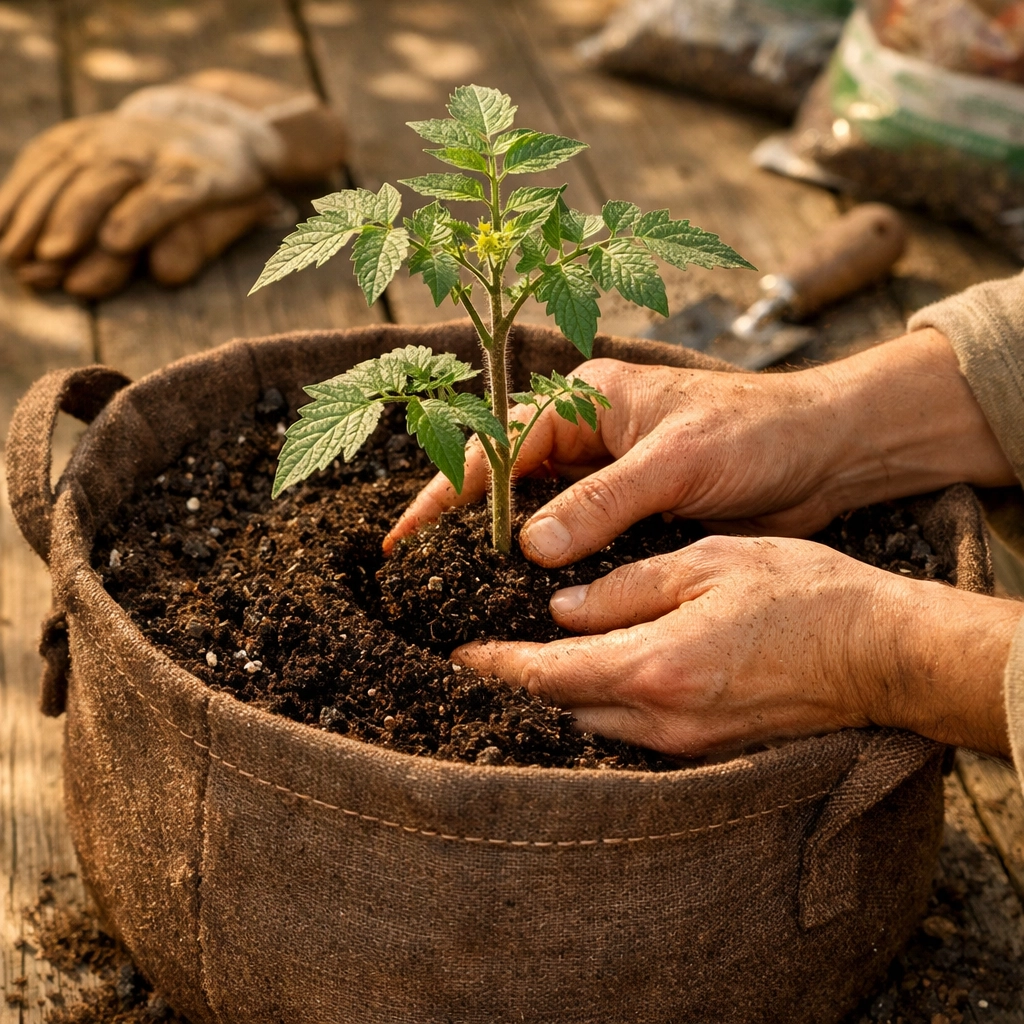
Choosing the Right Container: Size Matters More Than You Think
Here's where a lot of folks stumble right out of the gate. They grab a cute little pot from the garden center and wonder why their plant stays stunted and sad-looking. Cherokee Purple needs room to spread its roots, plain and simple.
Go big or go home. You're looking for a container that holds at least 15 to 20 gallons, that translates to roughly 24 to 48 inches deep and 18 to 36 inches across. I know that sounds massive, and it is, but remember: this plant is going to produce large, heavy fruit. It needs a strong root system to support all that delicious growth.
I've seen gardeners succeed with containers on the smaller end (around 18x14 inches), but they had to be extra diligent about watering and feeding. If you're new to this, give yourself some wiggle room and go larger.
Material-wise, you've got options:
- Fabric grow bags are my personal favorite for tomatoes. They provide excellent drainage, prevent roots from circling, and they're lightweight if you need to move things around.
- Food-safe plastic containers work great and hold moisture better than fabric, which can be a blessing in hot, dry climates.
- Clay or ceramic pots look beautiful and provide stability against wind, but they're heavy and can dry out faster in the heat.
Whatever you choose, make sure it has plenty of drainage holes. Tomato roots sitting in soggy soil is a recipe for root rot, and that's a heartbreaker nobody wants to deal with.
The Foundation: Getting Your Soil Right
This might be the most important section in this whole guide, so lean in close. Container tomatoes live and die by their soil quality.
Don't, and I mean don't, use regular garden soil in your pots. Garden soil is too dense for containers. It compacts, suffocates roots, and drains poorly. Instead, grab yourself a high-quality potting mix that's light, fluffy, and full of organic matter.
Here's my go-to recipe:
- Start with a premium potting mix as your base
- Mix in generous amounts of compost or well-aged manure
- Add a handful of worm castings if you can get them (liquid gold for tomatoes)
- Blend in some perlite or vermiculite to improve drainage
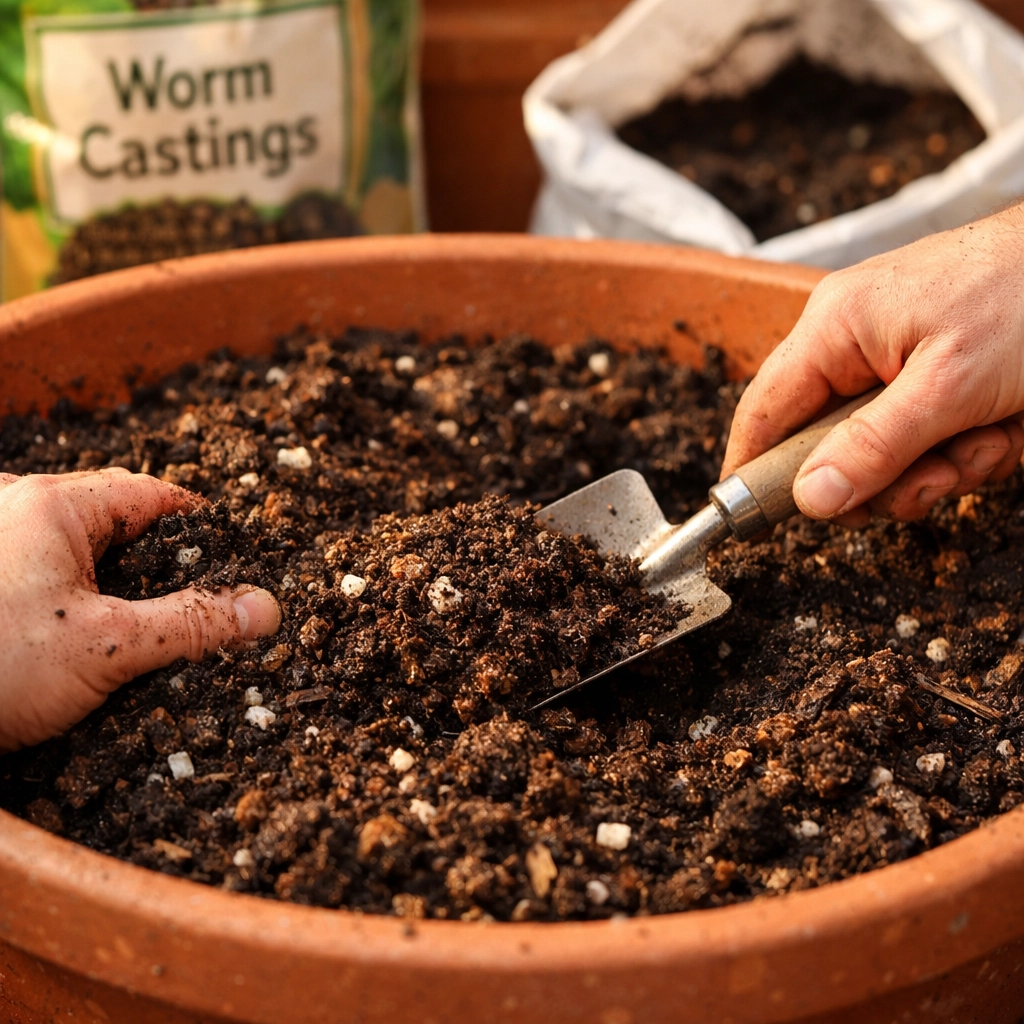
Before planting, I like to work in a slow-release organic fertilizer. Cherokee Purple is what we call a heavy feeder, it's hungry for nutrients all season long. Setting up that nutritional foundation from day one makes everything easier down the road.
Sunlight: The Secret Ingredient You Can't Skip
Cherokee Purple tomatoes are sun worshippers through and through. They need 6 to 8 hours of direct sunlight daily, and honestly, more is better. If you've got a spot that gets full sun all day, that's your golden ticket.
For those of you working with limited space or dealing with shade from buildings, get creative. Move containers throughout the day if you can, chasing that sunshine. I've even seen apartment dwellers use small dollies under their pots to wheel them around their balconies as the sun shifts.
If natural light is scarce, grow lights can bridge the gap, especially if you're starting plants indoors or dealing with a cloudy climate. It's not quite the same as real sunshine, but it'll get the job done.
Temperature Talk: Timing Your Planting
Tomatoes are warm-season crops, and Cherokee Purple is no exception. Here's your temperature checklist:
- Soil temperature: Wait until it reaches at least 60°F before planting. Cold soil stunts growth and can stress young plants.
- Outdoor air temperature: Consistently above 55°F is your green light. Any colder, and your plant will sulk.
- Heat protection: In scorching climates, provide some afternoon shade during the hottest part of summer to prevent heat stress.
I've seen eager gardeners plant too early more times than I can count. Patience pays off here. A week or two of waiting for warmer weather beats weeks of watching a struggling plant any day.
Watering: Finding That Sweet Spot
Container plants dry out faster than in-ground plants, it's just the nature of the beast. The sun heats up the sides of your pot, evaporation happens quicker, and roots have less buffer against temperature swings.
Check your soil moisture daily, especially during hot weather. Stick your finger about two inches into the soil. If it's dry, it's time to water. If it's still moist, hold off.
The key is consistency. Irregular watering causes all sorts of problems, blossom end rot (those ugly black spots on the bottom of your tomatoes) and fruit cracking are the big ones. Your plant needs a steady, reliable moisture supply to produce quality fruit.
Water deeply when you do water, until you see it draining out the bottom. This encourages roots to grow downward, creating a stronger, more resilient plant.
Support Systems: Don't Wait Until It's Too Late
Here's a rookie mistake I see all the time: someone waits until their tomato plant is already big and bushy before trying to stake it. Then they're wrestling with branches, accidentally breaking stems, and disturbing roots.
Install your support system right when you plant, or at least within the first week. Your future self will thank you.
For Cherokee Purple in containers, you've got a few good options:
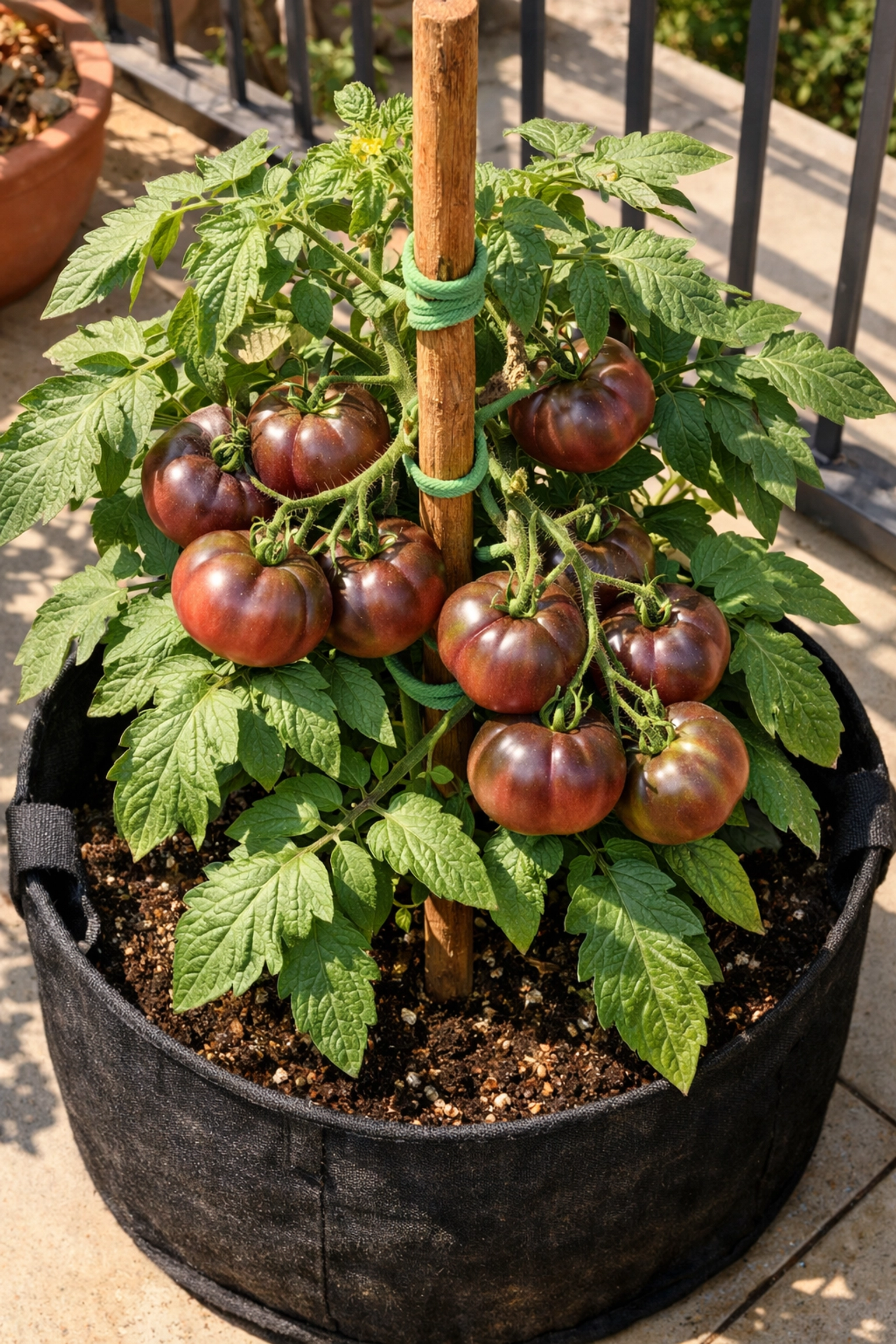
- Tall stakes (at least 6 feet) driven into the soil and tied to the container for stability
- Heavy-duty tomato cages designed for indeterminate varieties, not those flimsy wire things that collapse under weight
- Trellis systems attached to a wall or railing, perfect for balcony gardening
As your plant grows, gently tie branches to your support using soft garden ties or strips of old t-shirts. You want to support the weight without constricting the stems.
Feeding Your Hungry Plant
Remember when I mentioned Cherokee Purple is a heavy feeder? That slow-release fertilizer you mixed into your soil at planting will carry you through the early weeks, but once your plant starts flowering and setting fruit, it's going to need supplemental feeding.
I like to use a balanced organic fertilizer every two to three weeks during the growing season. Look for something with:
- High nitrogen early on for leafy growth
- Moderate phosphorus to support flowering
- High potassium once fruit starts forming, this is key for flavor development
Some folks swear by fish emulsion or compost tea. Others prefer granular organic fertilizers. They all work, just stay consistent with whatever you choose.
What to Expect: Real Talk About Yields
Let's set realistic expectations here. Cherokee Purple isn't bred for massive yields like commercial hybrid varieties. You're looking at around 20 tomatoes per plant over the growing season, maybe a bit more if conditions are absolutely perfect.
But here's the thing: quality over quantity, my friend. Each of those tomatoes will be packed with more flavor than a whole basket of store-bought ones. That deep, rich, almost wine-like taste with a hint of smokiness? That's what you're growing for.
The fruit themselves are hefty, often weighing 8 to 12 ounces each. They'll ripen to a gorgeous dusky purple-brown color, and the flesh inside is a deep red-pink that looks as good as it tastes.
Your Container Garden Journey Starts Now
Growing Cherokee Purple tomatoes in pots isn't just possible, it's downright rewarding. You don't need acres of farmland or even a backyard. A sunny balcony, a patio, or even a well-lit driveway can become your tomato-growing paradise.
Y'see, at the end of the day, it's about understanding what your plant needs and then providing it: enough space for roots to spread, rich soil full of nutrients, consistent water, plenty of sunshine, and strong support as it grows. Give Cherokee Purple those things, and it'll reward you with some of the finest tomatoes you've ever tasted.
So grab yourself a big pot, some quality soil, and a starter plant or seeds. Your small-space tomato adventure is waiting, and trust me: that first bite of a sun-warmed Cherokee Purple tomato you grew yourself will make every bit of effort worth it.