
There's something deeply satisfying about growing your own eggplant from seed. The glossy, deep purple fruits hanging from sturdy plants you nurtured from tiny seeds feels like a real accomplishment in the garden. But here's the truth: eggplant can be a bit finicky to get started. Over the years, I've learned that success with eggplant comes down to understanding their particular needs, especially in those critical early weeks.
If you're ready to grow beautiful eggplants from seed this season, let's walk through everything you need to know for a harvest that'll make your neighbors jealous.
Why Start Eggplant from Seed?
Starting eggplant from seed gives you access to incredible heirloom varieties you simply won't find at your local nursery. While garden centers typically stock one or two common varieties, growing from seed opens up a world of colors, shapes, and flavors. Japanese varieties, Italian heirlooms, striped beauties: they're all within reach when you start from seed.
Plus, heirloom seeds connect you to generations of gardeners who've saved and shared these varieties. There's something special about growing the same eggplant your great-grandmother might have grown in her victory garden.
Timing Your Eggplant Seeds
Timing is everything with eggplant. These heat-loving plants need a long growing season, which means starting seeds indoors well before your last frost date.
Start your seeds 6-10 weeks before your last expected frost. For most gardeners, this falls somewhere between late February and early April, depending on your location. Check your hardiness zone and work backward from there. The goal is to have strong, established seedlings ready to transplant outdoors when soil temperatures consistently reach 60°F or higher: ideally closer to 70-80°F.
Don't rush the outdoor planting. Eggplant absolutely despises cold soil and chilly nights. A late spring frost or cold snap can set your plants back weeks or kill them entirely. Patience pays off here.
The Seed Starting Process
Let's get those seeds started right. Eggplant seeds need specific conditions to germinate successfully, and cutting corners here leads to frustration down the road.
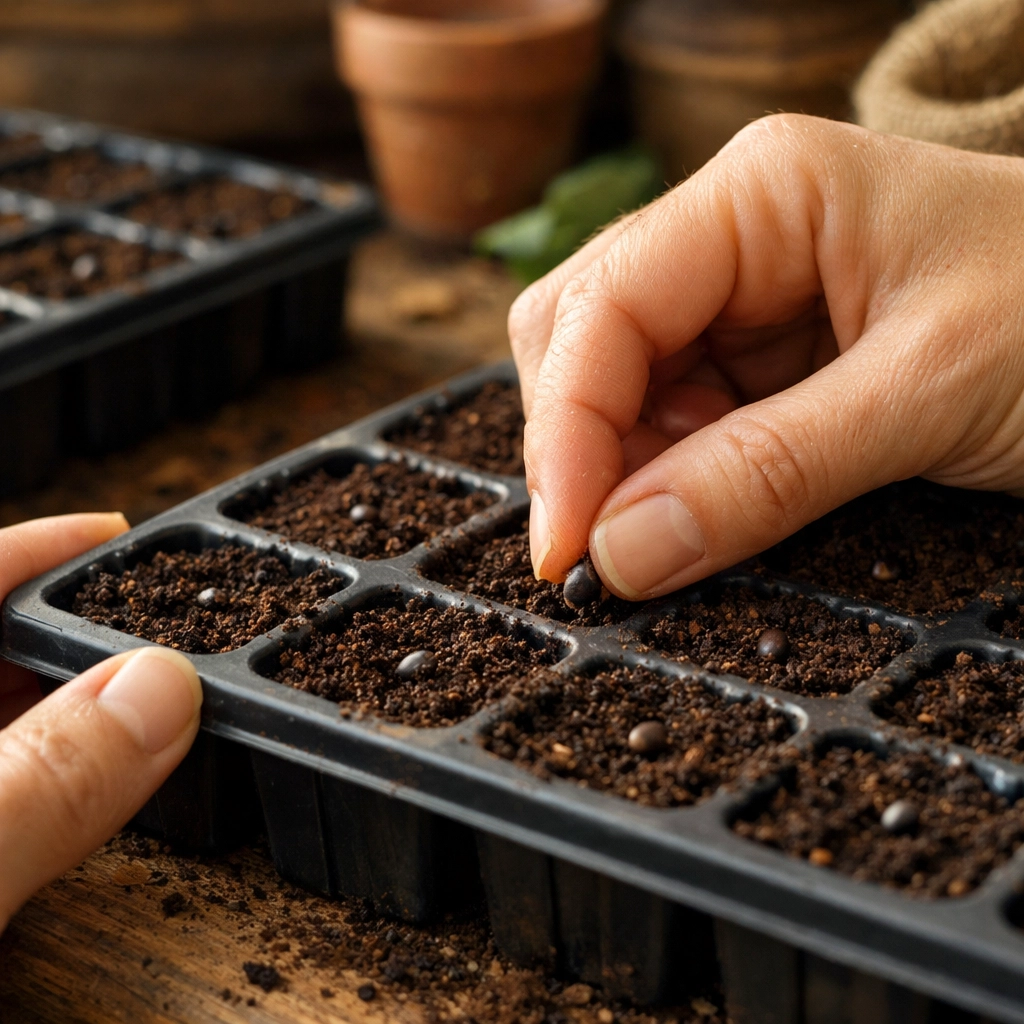
Use a quality seed-starting mix: not garden soil, which is too heavy and can harbor diseases. Fill your seed trays or cells with moistened seed-starting mix. Sow seeds about ¼ inch deep. Here's a trick I've learned: scatter 4-5 seeds per cell rather than trying to place just one or two. This insurance policy ensures you'll have at least one strong seedling emerge, even if germination isn't perfect.
After sowing, cover seeds with another ¼ inch of seed-starting mix and gently firm it down. Water from the base using a tray underneath your seed cells rather than watering from above, which can wash tiny seeds too deep into the soil or displace them entirely.
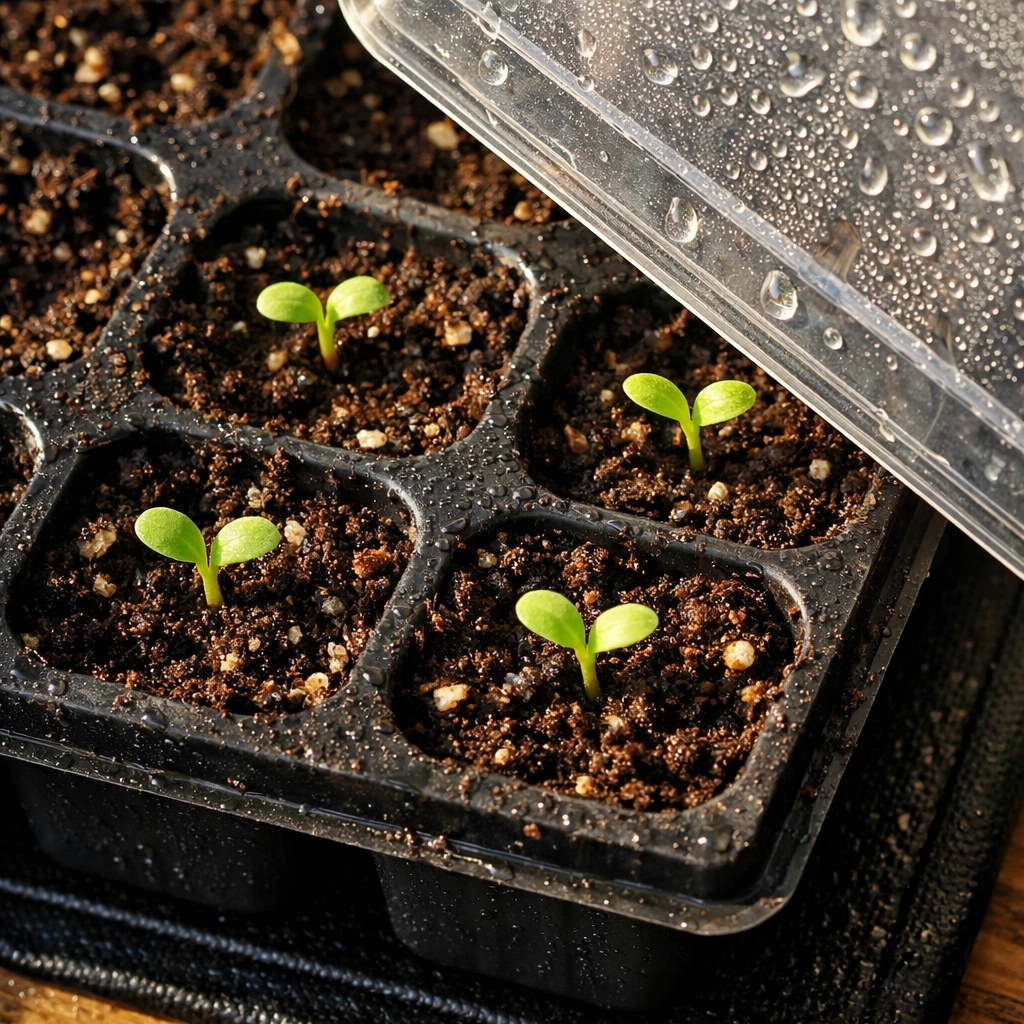
Cover your seed trays with a humidity dome or plastic wrap to lock in moisture. Seeds need consistent moisture to germinate, and this covering prevents the soil surface from drying out between waterings.
Temperature is Everything
Here's where many gardeners struggle with eggplant: these seeds are extremely temperature-sensitive. While tomatoes and peppers might forgive you for slightly cool conditions, eggplant won't budge.
Maintain soil temperatures between 75-90°F for germination. Room temperature isn't warm enough. You'll need bottom heat from a seedling heat mat. Most heat mats default to 70°F, which sounds warm but is actually too cool for reliable eggplant germination. If your mat has a thermostat, set it to 80°F for optimal results.
Keep seeds in the dark until they sprout, which typically takes 10-14 days under ideal conditions. Once you see those first green shoots emerging, immediately move trays to bright light: either a sunny south-facing window or under grow lights positioned 2-3 inches above the seedlings. Keep the heat mat running even after germination; eggplant seedlings grow best in warm conditions.
Caring for Your Seedlings
Your tiny eggplant seedlings need attentive care to develop into strong transplants. Think of this phase as building a solid foundation for future productivity.
Two weeks after germination, introduce a gentle fertilizer. Seaweed-based fertilizers work beautifully here: mix about 1 tablespoon per gallon of water and apply it from the base. Seaweed provides trace minerals and growth hormones that give seedlings a healthy boost without burning tender roots.
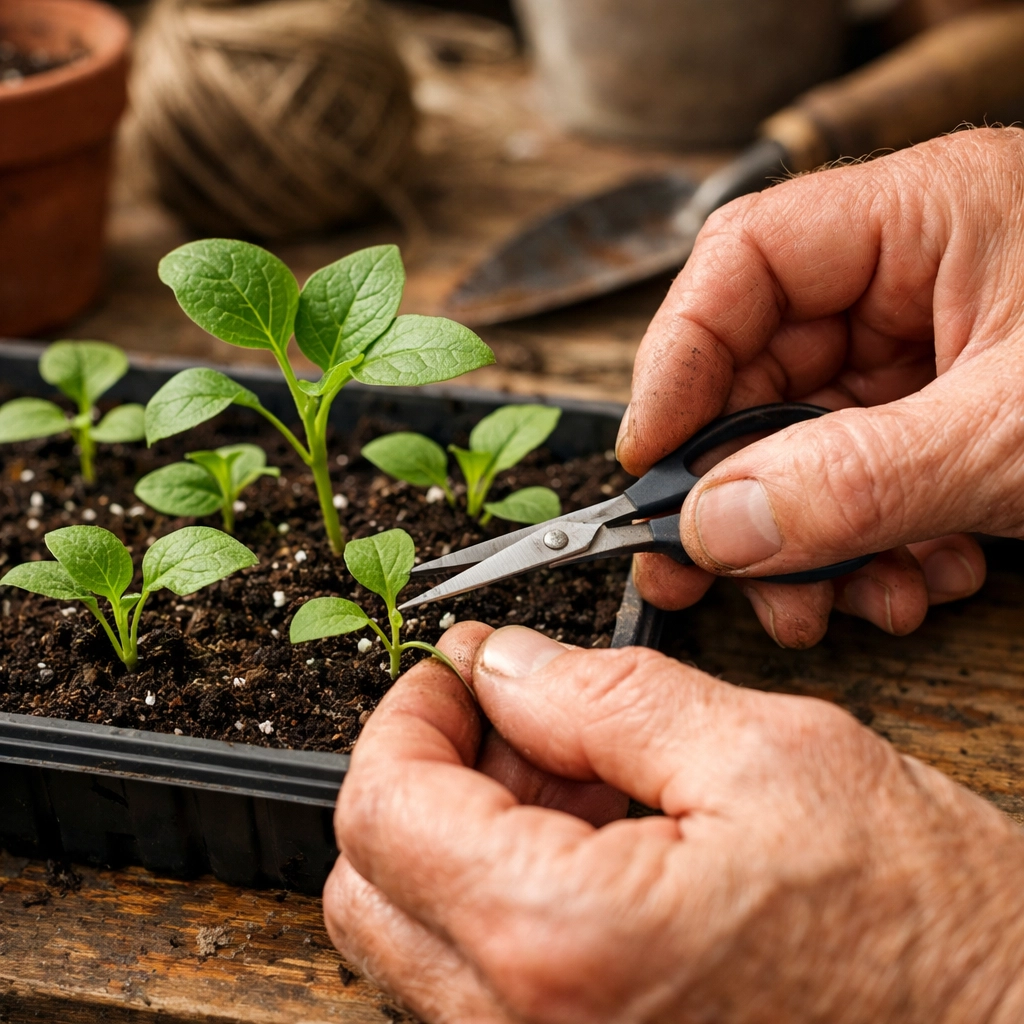
When seedlings develop their first true leaves (the second set of leaves that appear), it's time to thin. This feels wasteful, but it's essential. Thin to one seedling per cell, choosing the strongest, most vigorous plant. Use small scissors to snip off the extras at soil level rather than pulling them, which can disturb the roots of the keeper seedling.
Keep seedlings warm and in bright light. If they start stretching tall and leggy, they're not getting enough light. Move them closer to your light source or increase the hours of supplemental lighting.
Hardening Off: The Critical Transition
Don't skip this step. Hardening off is the gradual process of acclimating your pampered indoor seedlings to outdoor conditions, and it's absolutely essential for success.
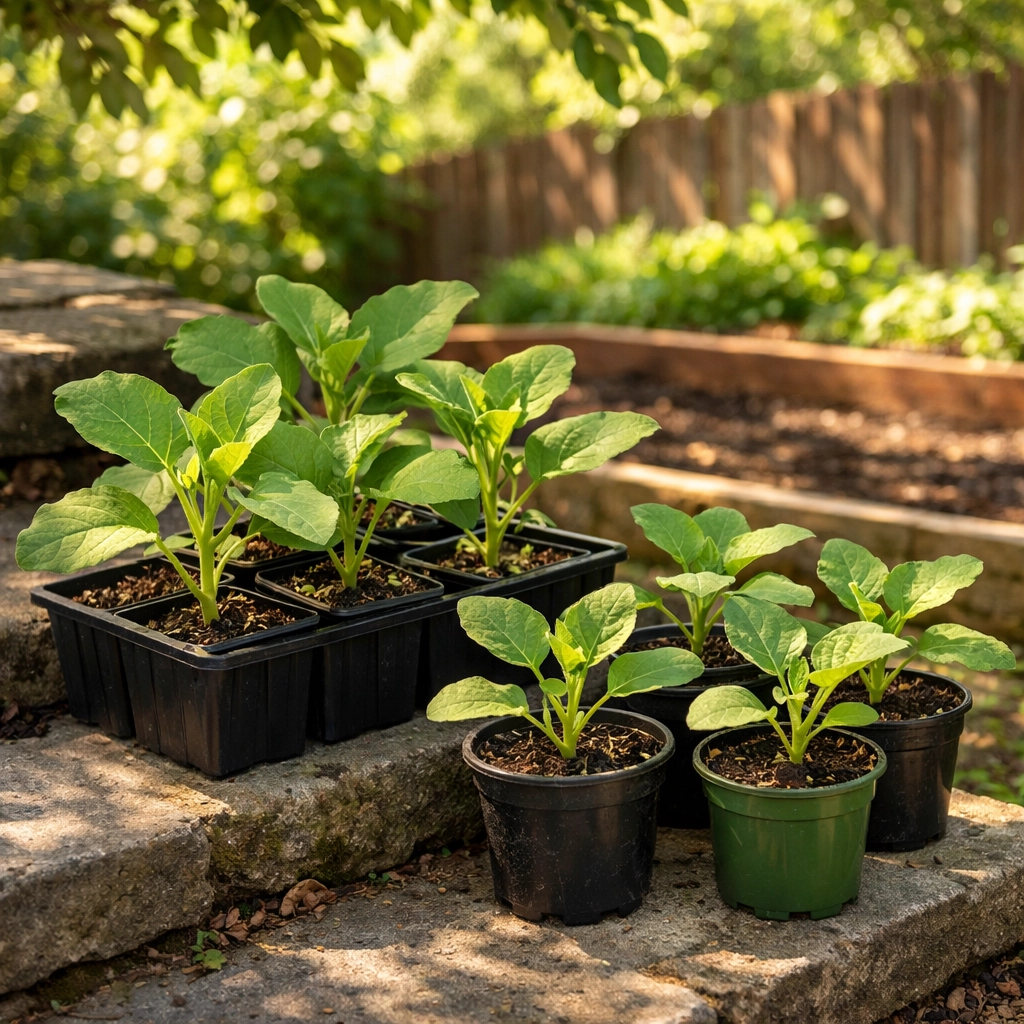
Start the hardening-off process 1-2 weeks before your planned transplant date. Begin by placing seedlings outside in a protected, shaded area for just 1-2 hours on the first day. Choose a mild day without strong winds. Gradually increase their outdoor time and sun exposure over the following week, eventually leaving them out overnight in their final week indoors.
This gradual exposure toughens up plant tissues and helps seedlings adapt to temperature fluctuations, wind, and direct sunlight. Plants that aren't properly hardened off often experience transplant shock, showing wilted, sunburned leaves and stunted growth.
Transplanting to the Garden
Now for the exciting part: getting those eggplants into the garden. Wait until soil temperatures are consistently 60°F or higher, and all danger of frost has passed. Ideally, soil should be 70-80°F for best growth.
Choose a location with full sun: this is non-negotiable for eggplant. They need at least 6-8 hours of direct sunlight daily to produce well. Prepare your soil by working in compost or aged manure. Eggplants are heavy feeders and appreciate rich, well-draining soil with a pH between 5.5 and 7.5.
Space plants 18-24 inches apart in rows spaced 30-36 inches apart. This generous spacing provides good air circulation, which helps prevent disease and gives each plant room to develop. Dig holes slightly larger than your seedling's root ball, gently remove plants from their containers, and set them at the same depth they were growing. Water thoroughly after transplanting.
Consider adding a stake or small cage at planting time. Many eggplant varieties grow tall and heavy with fruit, and providing support early prevents damage later.
Care for a Bountiful Harvest
Your work isn't done once eggplants are in the ground. These productive plants need consistent care throughout the growing season to reward you with abundant harvests.
Fertilize regularly. Eggplants are among the heaviest feeders in the garden. Apply a balanced fertilizer like 10-10-10 every two weeks throughout the growing season. Here's a tip that's made a real difference in my garden: add 1 tablespoon of Epsom salt around each plant monthly. The magnesium boost helps with fruit setting and reduces blossom drop.
Water deeply, providing about 1 inch of water per week. Consistent moisture is important: erratic watering can cause blossom end rot or bitter fruit. Mulch around plants with straw or shredded leaves to conserve moisture and suppress weeds.
Prune for productivity. Remove suckers that form above the first flowers, and prune off lower leaves as plants grow. This improves air circulation around the base of plants, reducing disease pressure and pest issues. It also directs the plant's energy toward fruit production rather than excessive foliage.
Watch for common pests like flea beetles and Colorado potato beetles. Regular inspection and hand-picking work well for small infestations. For larger problems, row covers early in the season can prevent beetles from reaching plants.
Harvest eggplants when they're glossy and firm, before the skin becomes dull. Use pruners or a sharp knife to cut fruit from the plant, leaving a short stem attached. Regular harvesting encourages continued production throughout the season.
Your Eggplant Journey Starts Here
Growing eggplant from seed requires attention to detail, but the payoff is absolutely worth it. From selecting quality heirloom seeds to nurturing seedlings through transplanting and finally harvesting glossy fruits from plants you grew yourself: it's a rewarding process from start to finish.
The key is understanding eggplant's specific needs: warmth, patience with timing, and consistent care. Get these fundamentals right, and you'll be rewarded with a bountiful harvest that extends from midsummer well into fall. Whether you're growing classic Black Beauty, slender Asian varieties, or stunning striped Italian heirlooms, the process remains the same.
Ready to start your eggplant seeds? With these tips in your gardening toolkit, you're well-equipped for success. Here's to a garden full of beautiful, productive eggplants this season.