
In my years of growing vegetables, I've learned that nothing beats the instant gratification of harvesting your first radish. While most crops have you waiting weeks or months before you can taste the fruits of your labor, radishes burst out of the ground faster than you can say "spring planting." They're the perfect confidence-builder for beginning gardeners and a reliable quick crop for veterans looking to maximize their growing season.
Let's dig into why radishes deserve a prime spot in every garden, and how you can be pulling crisp, peppery roots in as little as three weeks.
Why Radishes Are Speed Champions
Radishes hold the title for fastest vegetable harvest in the garden, and it's not even close. Most varieties reach maturity in 25 to 30 days, with some blazing through in just 20 days from seed to table. Compare that to tomatoes (60-85 days), carrots (70-80 days), or even lettuce (45-55 days), and you'll see why radishes are the sprinters of the vegetable world.
This speed comes from their simple growing requirements. Radishes develop quickly in cool weather, need minimal nutrients compared to heavy feeders, and have shallow root systems that don't require deep soil preparation. They're also incredibly space-efficient, making them ideal for succession planting throughout the spring and fall seasons.
The Fastest Varieties to Grow
Not all radishes are created equal when it comes to speed. While the classic round red varieties are plenty fast, some heirloom and specialty types can shave off several days from your wait time.
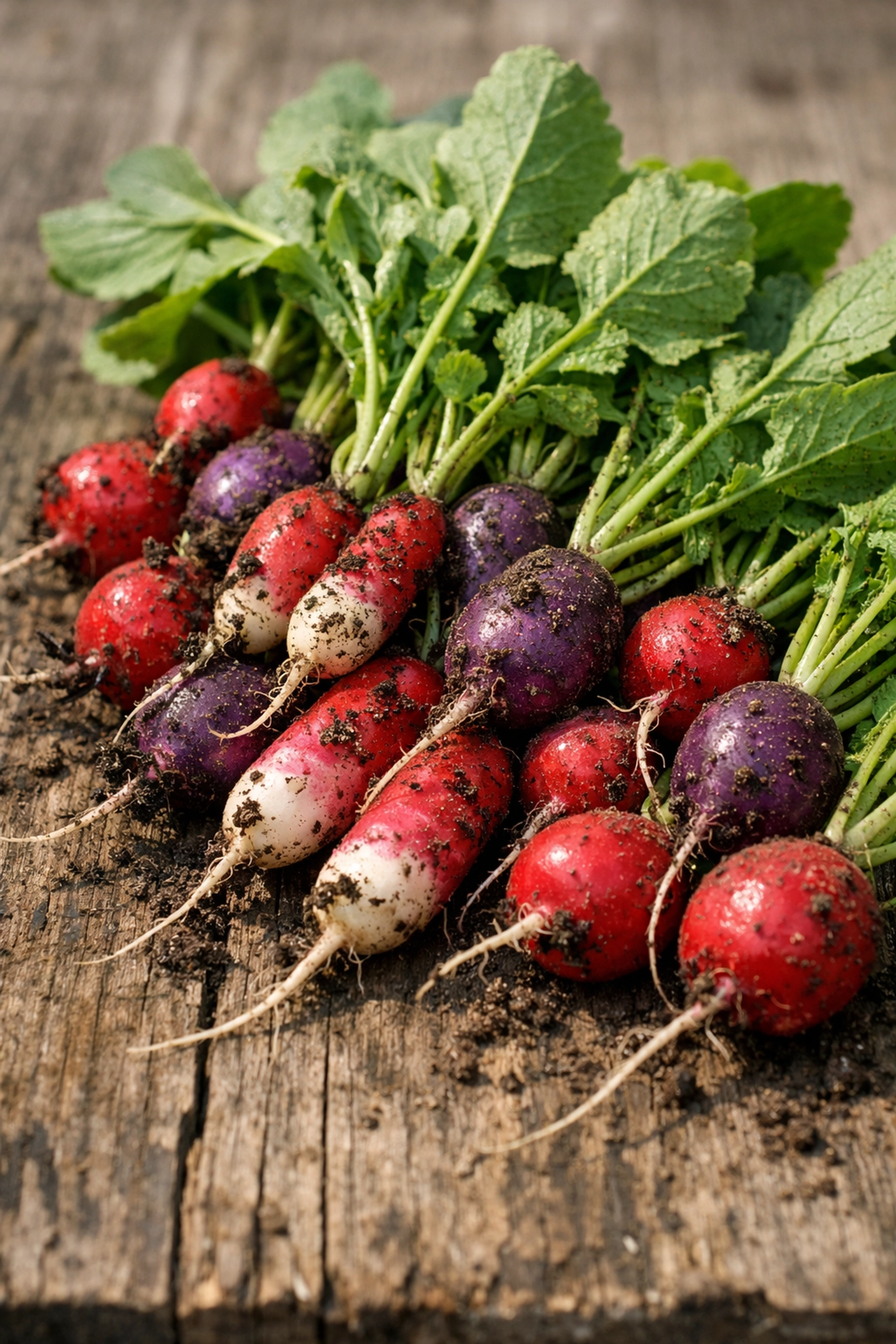
D'Avignon takes the crown at just 20 days to maturity. This French breakfast-type radish produces long, cylindrical roots with striking red tops that fade to white at the tip. The flavor is milder than many round varieties, making it perfect for kids or anyone who finds standard radishes too spicy.
Cherry Belle follows close behind at 24 days. These perfectly round, cherry-red radishes have bright white flesh and a satisfying crunch. They're my go-to recommendation for first-time gardeners because they're virtually foolproof and produce uniform roots that look like they came straight from a seed catalog.
Champion and Purple Plum both mature in 25 days. Champion delivers classic scarlet-red radishes with crisp white interiors, while Purple Plum offers something different with its purple skin and surprisingly mild flavor. The Purple Plum variety is particularly good for people who want the satisfaction of growing radishes but don't love that sharp, peppery bite.
For something slightly slower but worth the wait, try Sparkler at 28 days. These beauties have scarlet upper portions that blend into white bottoms, creating a natural two-tone effect that makes every salad more interesting.
Planting Radishes for Maximum Speed
The secret to lightning-fast radishes starts before you even put seeds in the ground. Timing is everything with these cool-season crops. Plant them in early spring when soil temperatures hit 40-70°F, or in late summer for a fall harvest. Radishes planted in hot weather become woody, pithy, and unpleasantly spicy.
Choose a spot with full sun, though radishes will tolerate partial shade better than most vegetables. The soil doesn't need to be rich, but it should be loose and well-draining. Heavy clay soils produce misshapen roots, so work in some compost or aged manure if your soil is compacted.
Sow seeds directly in the garden about half an inch deep and one inch apart. Don't bother starting radishes indoors, they hate transplanting and you'll only slow them down. The beauty of radish seeds is that they're large enough to handle easily, making them perfect for getting kids involved in the garden.
The Critical First Two Weeks
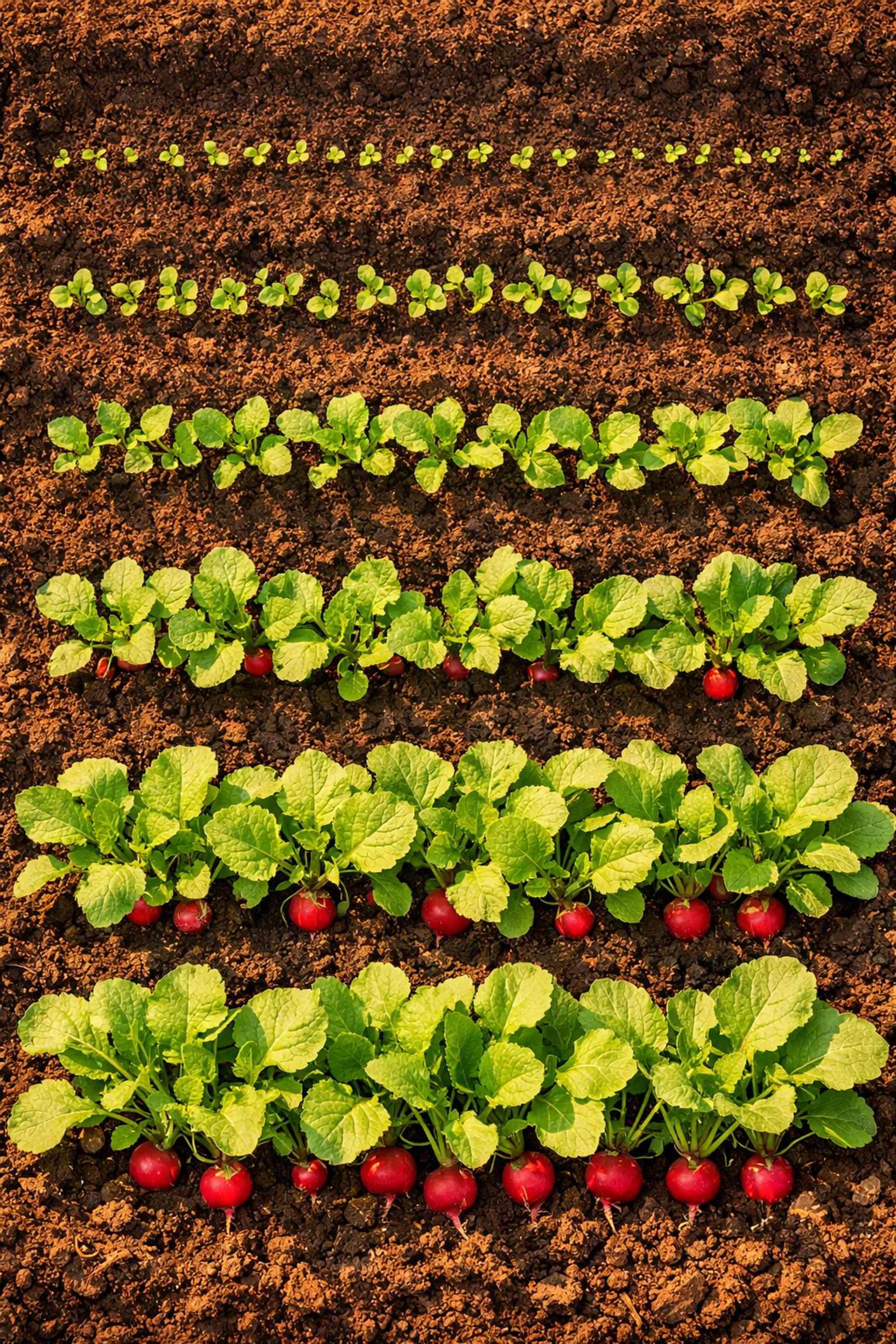
Those first 14 days after planting determine whether you'll be harvesting prize-winning radishes or disappointing, woody roots. Keep the soil consistently moist but never waterlogged. This is where many gardeners go wrong, they water irregularly, and the radishes respond by cracking, becoming pithy, or simply refusing to size up properly.
I check my radish bed every morning during germination. In warm weather, this might mean watering twice a day until the seedlings establish. Think of it like tending young transplants, they need attention, but not fussing over.
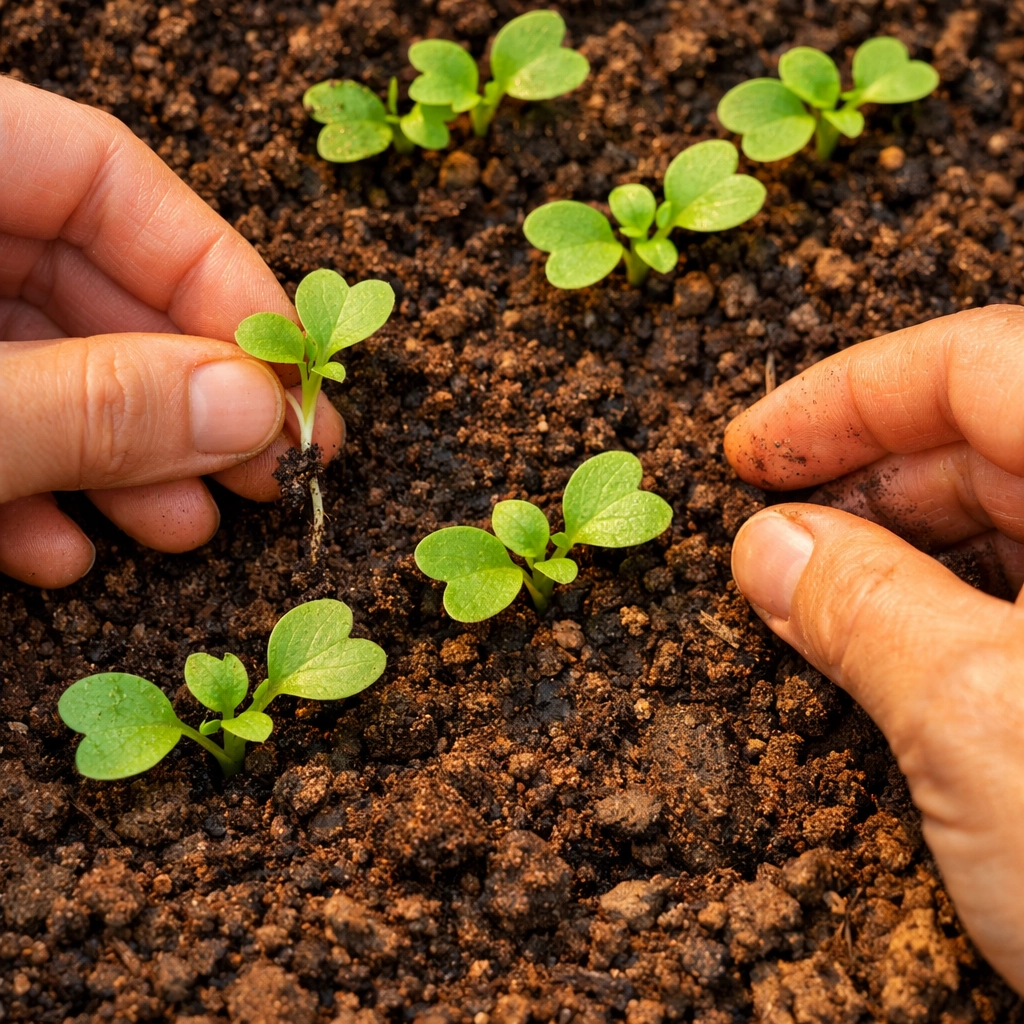
Thin seedlings to about two inches apart once they develop their first true leaves. Yes, it feels wasteful to pull perfectly good seedlings, but crowded radishes produce all tops and no roots. Those thinnings aren't trash though: toss them in salads for a mild, peppery kick.
Succession Planting: The Non-Stop Harvest
Here's where radishes really shine in the garden. Because they mature so quickly, you can practice succession planting to keep fresh radishes coming all season long. Plant a new row every two weeks from early spring through late May, then start again in late August for fall harvests.
I typically plant four-foot rows every other Saturday during prime radish season. By the time I'm harvesting row one, row two is almost ready, row three is sizing up, and I'm planting row four. This rotation means we're never overwhelmed with radishes all at once, and we're never without them either.
Mark your planting dates on a calendar or use your phone's reminder function. It's easy to lose track when you're juggling multiple crops, and before you know it, you've missed your planting window.
Common Radish-Growing Mistakes
Even with such a simple crop, there are ways to stumble. The most common mistake is leaving radishes in the ground too long. That 25-day maturity date isn't a suggestion: it's a deadline. Wait too long, and your radishes become woody, hollow, and so spicy they're nearly inedible.
Start checking your radishes a few days before the expected maturity date. Gently brush away soil from the top of one or two roots to check their size. When they reach about the diameter of a quarter (for round varieties), pull them up. Better to harvest slightly early than a day too late.
Another pitfall is planting radishes in the heat of summer. I learned this lesson the hard way when I first started gardening. June-planted radishes bolted straight to seed, producing inedible roots and teaching me a valuable lesson about seasonal timing. Save your radish seeds for spring and fall when cool temperatures bring out their best qualities.
Beyond the Basics: Radish Sprouts and Microgreens
If you thought 20-day radishes were fast, consider growing radish sprouts or microgreens. These are ready to harvest in just 5 to 10 days and require almost no space or equipment. You can grow them indoors year-round on a sunny windowsill.
Radish sprouts pack the same peppery punch as mature radishes in a tender, crunchy package perfect for sandwiches and salads. They're also incredibly nutritious, containing concentrated vitamins and minerals. I keep a rotation of radish sprouts going in my kitchen during winter when the garden is dormant.
Storing and Using Your Harvest
Fresh radishes store reasonably well in the refrigerator for up to two weeks. Cut off the greens immediately after harvest: they pull moisture from the roots and cause them to shrivel. Wash the roots, pat them dry, and store them in a plastic bag with a damp paper towel.
Don't toss those greens though. Young radish leaves are edible and delicious when sautéed with garlic or added to soups. They have a mild, slightly peppery flavor similar to mustard greens but more delicate.
The Gateway Vegetable
Radishes hold a special place in gardening because they deliver success quickly. For children or adults growing their first vegetables, few experiences match the thrill of pulling a perfect radish from the soil three weeks after planting seeds. That immediate feedback loop: plant, tend, harvest: builds confidence and excitement for tackling longer-season crops.
When you're working with quality heirloom seeds, you're also participating in a tradition that stretches back generations. Many of the varieties we grow today have been carefully saved and passed down by gardeners who recognized their exceptional qualities.
Your Turn to Grow
Radishes prove that gardening doesn't require endless patience. Within a month of planting your first seeds, you'll be adding homegrown vegetables to your meals. Start with a simple variety like Cherry Belle or Champion, pay attention to watering, and harvest promptly. Before long, you'll be experimenting with succession planting, trying exotic varieties, and wondering why radishes don't get more respect in the gardening world.
The fastest harvest in your garden is waiting: all you need to do is plant some seeds and count to 25.