When I first started growing peppers and tomatoes, I stood in the seed aisle completely overwhelmed. Heirloom packets promised "authentic flavor" and "heritage varieties," while hybrid seeds boasted "disease resistance" and "uniform harvests." Both sounded great, but what did it all actually mean for my garden?
After years of growing both types, I've learned that this choice goes beyond personal preference. It touches on something bigger: the biodiversity of our food system and the resilience of our gardens. Let's break down what makes these seeds different and why it matters more than you might think.
What Makes Heirloom Seeds Different?
Heirloom seeds are the old-timers of the gardening world. These are varieties that have been passed down through generations, often 50 years or more, and maintained through open pollination. That means they've been pollinated naturally by insects, birds, wind, or human hands without controlled breeding programs.
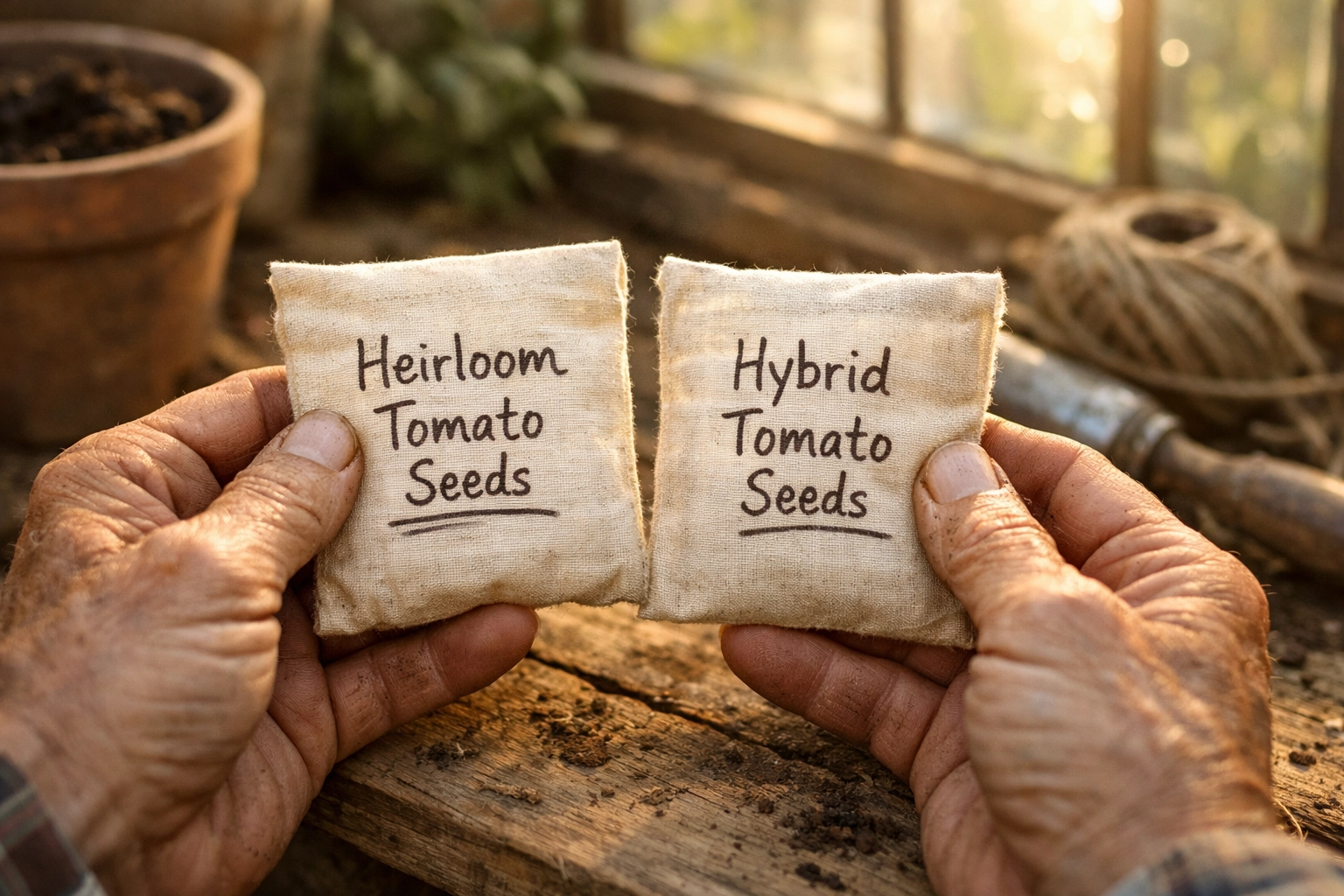
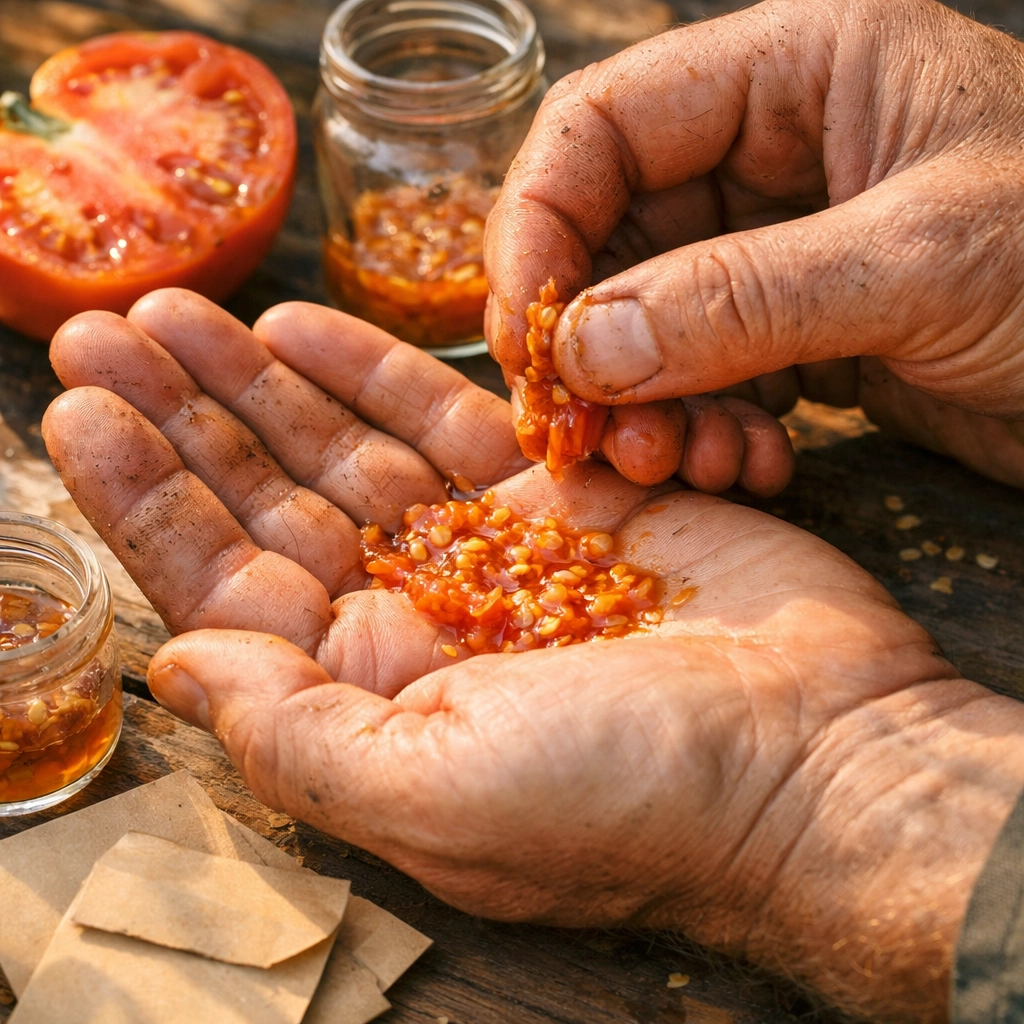
The beauty of heirloom seeds is their genetic consistency. When you save seeds from an heirloom tomato and plant them next season, you'll get the same variety. The offspring stays true to the parent plant. This predictability has allowed gardeners and small farmers to maintain seed independence for centuries, never needing to repurchase seeds if they save them properly.
Here at Farmer Flints, we focus on heirloom varieties like our Ghost Pepper seeds and California Wonder Bell Peppers because they connect us to agricultural heritage while supporting long-term garden sustainability.
Understanding Hybrid Seeds
Hybrid seeds, on the other hand, are created through controlled cross-pollination between two different parent varieties. Plant breeders select specific traits from each parent, say, disease resistance from one and compact growth from another, to create offspring with those combined characteristics.
The first generation (called F1 hybrids) displays these desired traits reliably. But here's the catch: if you save seeds from hybrid plants and replant them, the next generation won't breed true. You might get a wild mix of traits, some from each grandparent plant, and often not the characteristics you wanted. This means gardeners need to repurchase hybrid seeds each season.
Hybrids aren't inherently bad. They've been developed to solve real agricultural challenges, improving yields, creating disease resistance, and producing uniform harvests that make large-scale farming more efficient.
The Biodiversity Crisis We're Facing
Now let's talk about why this matters beyond your backyard. Over the last century, we've lost approximately 90% of our vegetable seed diversity. That's a staggering number, and it happened largely because commercial agriculture shifted toward a narrow selection of hybrid varieties that performed well at scale.
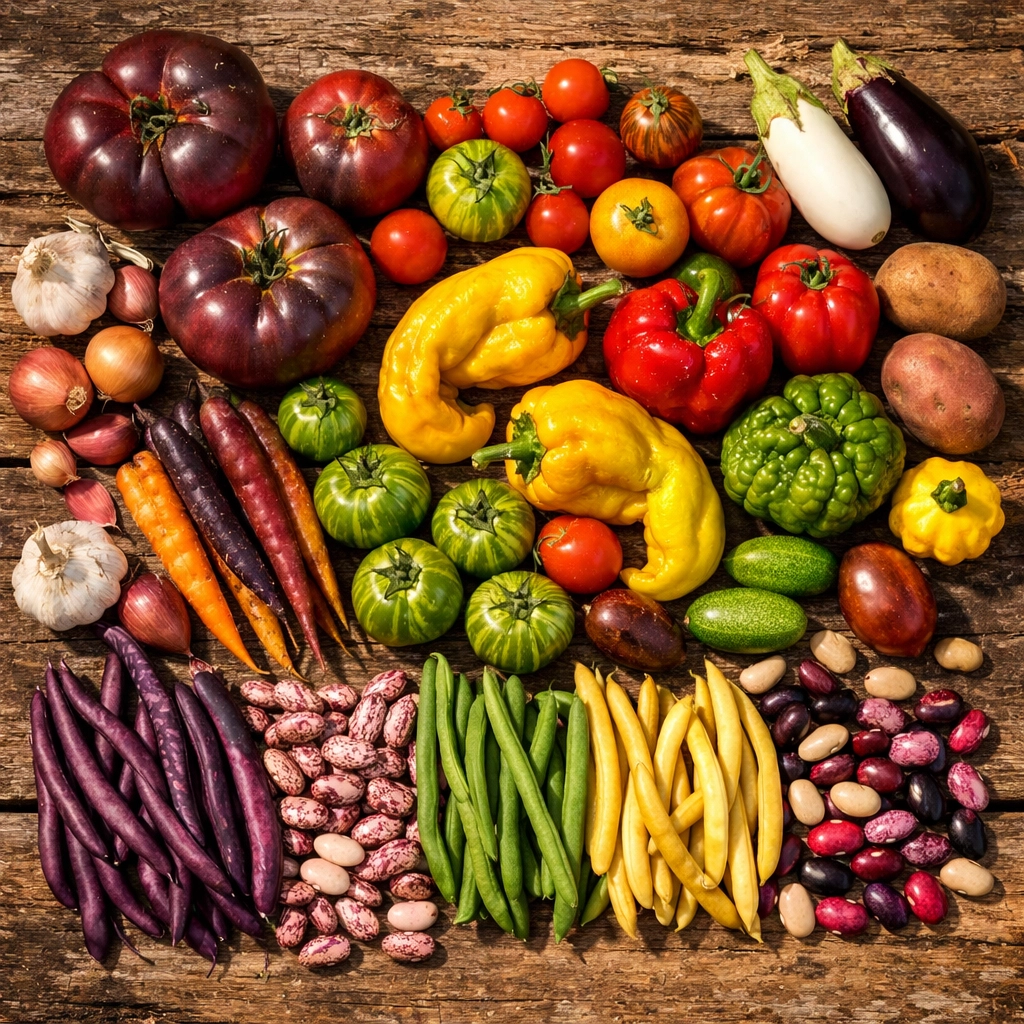
Think of it like this: if you only listened to ten songs on repeat for your entire life, you'd miss out on the incredible diversity of music that exists. Our agricultural system has essentially done that with seeds. We've narrowed our focus to varieties that ship well, look uniform, and grow predictably: but we've sacrificed genetic diversity in the process.
This creates vulnerability. When our food system relies on a narrow genetic pool, it becomes less adaptable to changing climates, new diseases, and environmental stresses. Diverse genetics act like an insurance policy for agriculture.
How Heirloom Seeds Support Biodiversity
Heirloom seeds maintain biodiversity through several powerful mechanisms that have worked for thousands of years.
Local Adaptation Over Time
Because heirloom varieties can be saved and replanted year after year, they slowly adapt to local conditions. A Cherokee Purple tomato grown in Colorado for several generations might develop slightly different characteristics than the same variety grown in Georgia. This regional adaptation creates resilience and helps plants thrive in specific microclimates.
Decentralized Seed Saving
Heirloom seeds can't be patented or owned by corporations. Any gardener can save, share, and propagate them freely. This decentralized approach has kept countless varieties alive, even when they weren't commercially profitable. Your neighbor's family might have maintained a pepper variety for four generations, preserving genetics that would have otherwise disappeared.
Genetic Variation Within Varieties
Open pollination allows slow, natural evolution. While each heirloom variety maintains its defining characteristics, there's still subtle genetic variation within that variety. This variation means the plants can adapt to environmental changes without losing their identity. They're completely enmeshed within their environment and culture, as some seed experts describe it.
The Practical Benefits of Growing Heirlooms
Beyond biodiversity, heirloom seeds offer tangible benefits for home gardeners.
Superior Flavor Profiles
Ask any gardener who's grown both, and they'll tell you: heirlooms typically win on taste. Because they weren't bred for shipping durability or shelf life, they were selected purely for flavor, texture, and local growing success. That Scotch Bonnet pepper you grow yourself tastes nothing like the bland versions you find in most grocery stores.
Long-Term Cost Savings
While heirloom seeds might cost slightly more upfront, you only need to buy them once. Save seeds from your best plants each season, and you'll never need to repurchase. Over the years, this adds up to significant savings and complete seed independence.
Connection to History
There's something special about growing the same pepper variety that someone's great-grandmother grew in 1920. Heirlooms connect us to agricultural heritage and the generations of gardeners who came before us.
The Trade-Offs Worth Considering
I believe in being honest about the challenges. Heirloom seeds aren't perfect for every situation, and understanding the trade-offs helps you make informed decisions.
Heirloom varieties are generally more susceptible to diseases than modern hybrids. Plant breeders have worked hard to develop disease-resistant hybrids, and that resistance can mean the difference between a successful harvest and complete crop failure in challenging conditions.
Heirloom plants also tend to produce lower yields and less uniform harvests. Your bell peppers might ripen over several weeks rather than all at once, and they might vary in size and shape. For home gardeners, this is often a benefit: you get fresh peppers continuously rather than being overwhelmed with 50 peppers in one week. But it's worth noting.
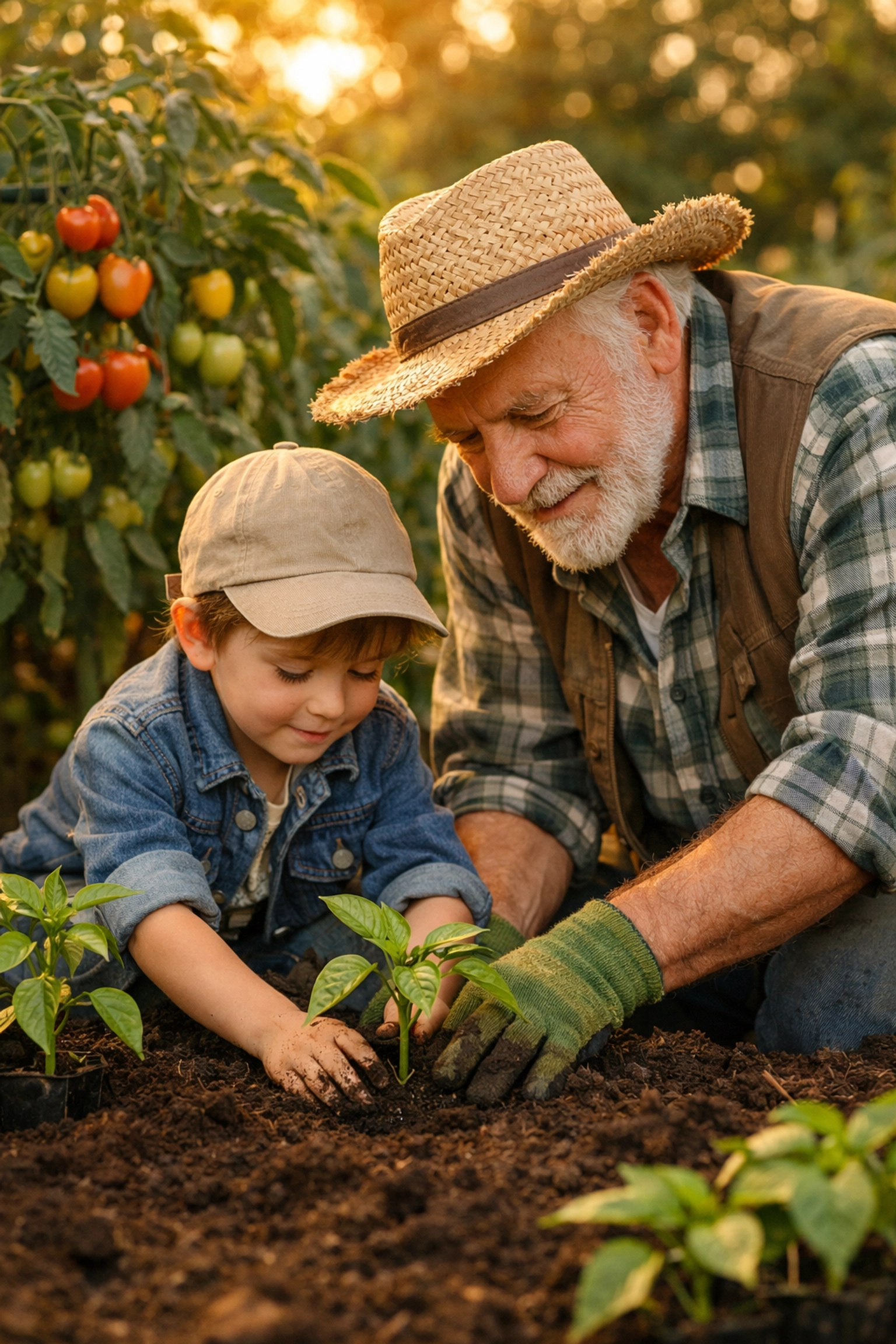
If you're dealing with limited space, known disease pressures in your area, or need consistent harvests for preservation, hybrids might serve you better in those specific situations. The key is matching the seed type to your specific needs and growing conditions.
Finding Your Balance
Most successful gardeners I know don't pick one camp and refuse to budge. They grow primarily heirlooms for flavor and seed-saving, but might include a few hybrid varieties for specific challenges in their garden.
Maybe you grow heirloom tomatoes for incredible taste but choose a hybrid cucumber that resists the powdery mildew that always hits your area in August. Or perhaps you focus on heirloom peppers but appreciate a hybrid lettuce that handles heat better. There's no gardening police: you get to decide what works for your space and goals.
The important thing is making conscious choices rather than defaulting to whatever's available at the big box store. When you choose heirloom seeds, you're participating in seed preservation and supporting biodiversity with every packet you plant.
Your Role in Preserving Diversity
Here's what excites me most about this topic: every home gardener who chooses heirloom seeds and saves them becomes a guardian of agricultural diversity. You're not just growing food: you're maintaining genetics that might otherwise disappear from the planet.
Start small if you're new to this. Pick one or two heirloom varieties that interest you, learn to save those seeds, and expand from there. Share seeds with neighbors and friends. Join local seed exchanges. These small actions collectively create a resilient, distributed seed-saving network that protects our food heritage.
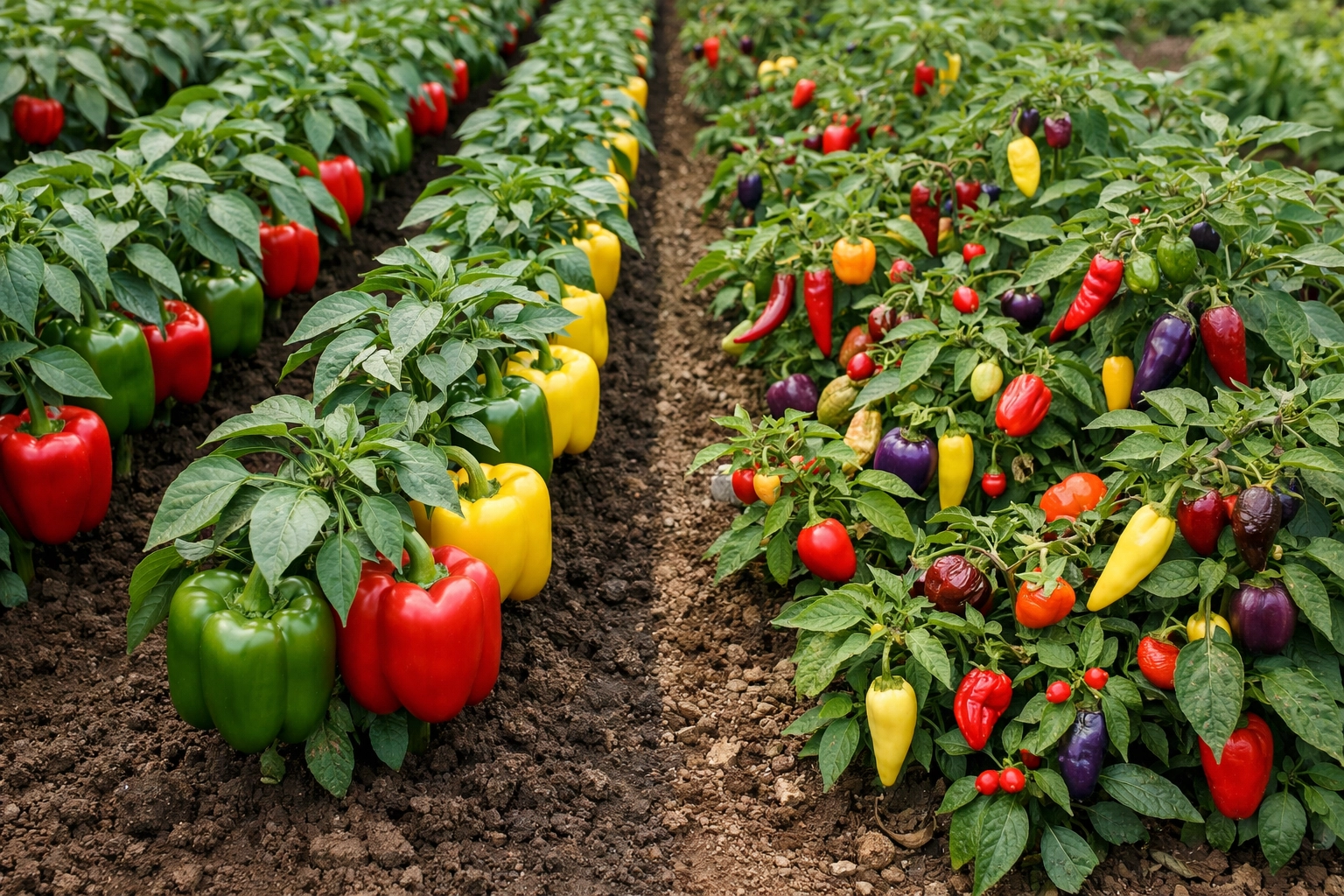
The choices we make in our gardens ripple outward. When you plant heirloom seeds, you're voting for biodiversity, flavor, and seed independence. You're connecting to centuries of agricultural tradition while helping ensure that future generations have access to the same genetic diversity we enjoy today.
That's why at Farmer Flints, we're committed to offering high-quality heirloom varieties. We believe your garden can be both productive and purposeful: growing food that tastes incredible while supporting the bigger picture of agricultural biodiversity. Check out our full selection of heirloom seeds and start your own journey toward more resilient, flavorful gardening.